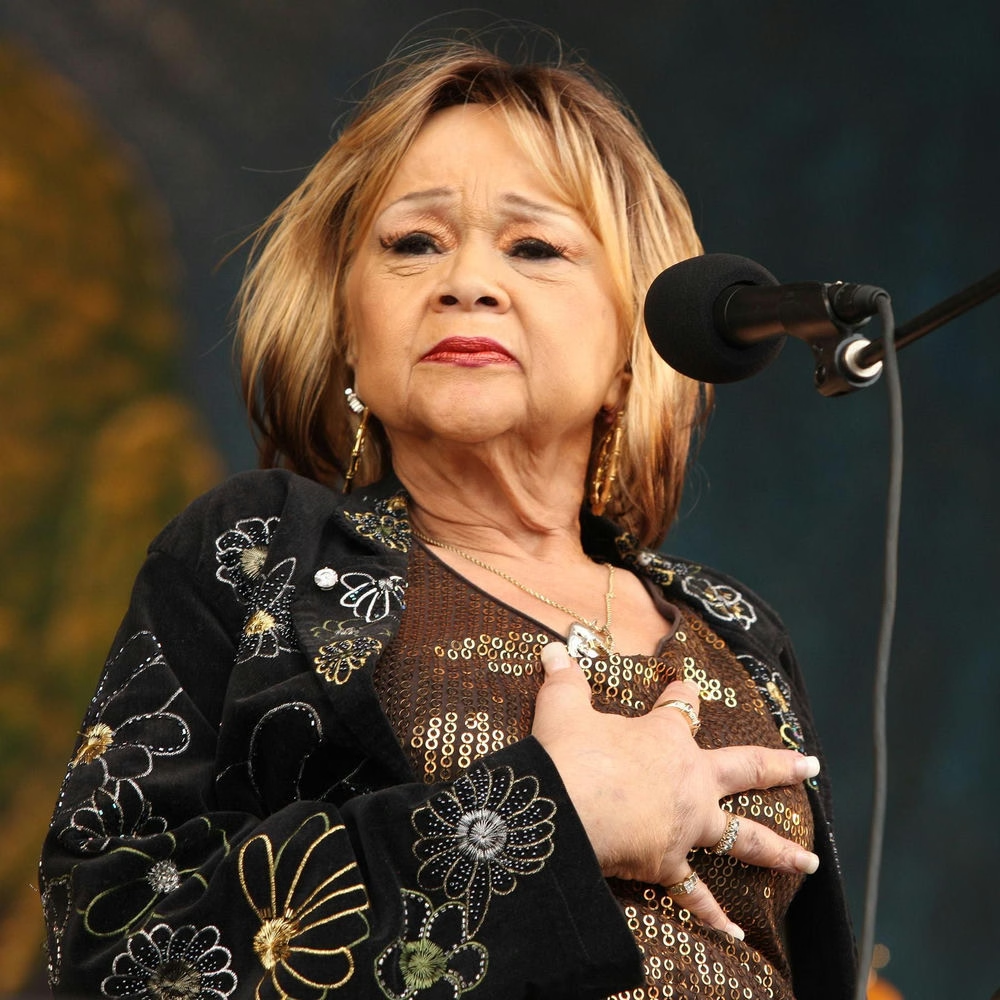
Etta James
1938 – 2012 (74)
At Last

Los Angeles, 1938. A girl born Etta Hawkins, raised by a revolving door of caretakers while her mother ran the streets, found her voice in a gospel choir before she was old enough to understand what the songs meant. By fourteen she was sneaking into clubs, by sixteen she was recording for Modern Records, and by the time she met Johnny Otis she had already lived enough hurt to fill a hundred albums.

0:30
0:30
0:30
0:30

Etta James did not learn to sing the blues. The blues learned to sing Etta James. She consumed the genre from the inside out, leaving teeth marks on every song she touched.

The world Etta James walked into was built to break women like her. The 1950s R&B scene was a boys' club run by label bosses, producers, and DJs who saw female singers as products with expiration dates. She was too rough for the polite company, too raw for crossover radio, too Black for white audiences and too wild for Black respectability politics. She fought addiction for decades -- heroin in the sixties, then alcohol, then pills -- and the fight shows in every recording. She lost years to the needle and then lost more years to the bottle. But here is the thing: she kept coming back. Chess Records signed her in 1960 and she made "At Last 0:30" in 1961, a song that should have been a simple ballad and became instead a declaration of survival disguised as a love song.

Etta James interview 1990

"At Last" is the song everyone knows, but knowing it from weddings and commercials is not the same as hearing what Etta James actually did to it. She takes a Mack Gordon-Harry Warren standard from 1941 and drags it through her life. The strings swell, the brass breathes, and her voice sits right in the pocket, confident and bruised at the same time. She does not hit the high notes so much as she rises to meet them, and when she drops back down there is a knowing in her tone that the lyric cannot contain.

She was fighting for the song the way she fought for her own survival. That tremble in her voice is not technique. It is memory. It is every club she sang in, every man who hurt her, every night she thought she would not make it to morning. She turned pain into pitch.

Etta James died in 2012, eight days before her seventy-fourth birthday. The obituaries called her a blues singer, which was true and not nearly enough. She was a breaker of categories, a voice that could do gospel, R&B, rock and roll, soul, and jazz without changing registers. Beyonce played her in a movie and the whole world watched, but the real tribute is in the grooves. Every time someone sings a love song like they mean the hurt behind it, that is Etta James. She ate the blues alive and what came out the other side was the truth.

Etta James was profiled in the documentary, Cadillac Records, in 2008.

Image Credits

1,414 artist portraits across 5 genres (Rock, Jazz, Soul, Blues, Folk). 1,363 sourced from Wikipedia (Creative Commons / Public Domain), 50 from Deezer (promotional artwork).

Full attribution breakdown →

Etta James

1938 – 2012 (74)
At Last

Los Angeles, 1938. A girl born Etta Hawkins, raised by a revolving door of caretakers while her mother ran the streets, found her voice in a gospel choir before she was old enough to understand what the songs meant. By fourteen she was sneaking into clubs, by sixteen she was recording for Modern Records, and by the time she met Johnny Otis she had already lived enough hurt to fill a hundred albums.

0:30
0:30
0:30
0:30

Etta James did not learn to sing the blues. The blues learned to sing Etta James. She consumed the genre from the inside out, leaving teeth marks on every song she touched.

The world Etta James walked into was built to break women like her. The 1950s R&B scene was a boys' club run by label bosses, producers, and DJs who saw female singers as products with expiration dates. She was too rough for the polite company, too raw for crossover radio, too Black for white audiences and too wild for Black respectability politics. She fought addiction for decades -- heroin in the sixties, then alcohol, then pills -- and the fight shows in every recording. She lost years to the needle and then lost more years to the bottle. But here is the thing: she kept coming back. Chess Records signed her in 1960 and she made "At Last 0:30" in 1961, a song that should have been a simple ballad and became instead a declaration of survival disguised as a love song.

Etta James interview 1990

"At Last" is the song everyone knows, but knowing it from weddings and commercials is not the same as hearing what Etta James actually did to it. She takes a Mack Gordon-Harry Warren standard from 1941 and drags it through her life. The strings swell, the brass breathes, and her voice sits right in the pocket, confident and bruised at the same time. She does not hit the high notes so much as she rises to meet them, and when she drops back down there is a knowing in her tone that the lyric cannot contain.

She was fighting for the song the way she fought for her own survival. That tremble in her voice is not technique. It is memory. It is every club she sang in, every man who hurt her, every night she thought she would not make it to morning. She turned pain into pitch.

Etta James died in 2012, eight days before her seventy-fourth birthday. The obituaries called her a blues singer, which was true and not nearly enough. She was a breaker of categories, a voice that could do gospel, R&B, rock and roll, soul, and jazz without changing registers. Beyonce played her in a movie and the whole world watched, but the real tribute is in the grooves. Every time someone sings a love song like they mean the hurt behind it, that is Etta James. She ate the blues alive and what came out the other side was the truth.

Etta James was profiled in the documentary, Cadillac Records, in 2008.

At Last!
The Second Time Around
Etta James (1962 album)
Etta James Sings for Lovers
Twist With Wtta James
Queen of Soul
Call My Name
Tell Mama
Etta James Sings Funk
Losers Weepers
Come a Little Closer
Etta Is Betta Than Evvah!
Deep in the Night
Changes
Seven Year Itch
Stickin' to My Guns
The Right Time
Mystery Lady: Songs of Billie Holiday
Time After Time
Love's Been Rough on Me
Life, Love & the Blues
12 Songs of Christmas
Heart of a Woman
Matriarch of the Blues
Blue Gardenia
Let's Roll
Blues to the Bone
All the Way
The Dreamer
bluessoulr&b
The Sunday Drop
One song. One story. Every Sunday.

No algorithms. No trending sections. Just a song someone loved and the story behind it. Delivered Sunday morning.

Free. No spam. Unsubscribe anytime.

Image Credits

1,414 artist portraits across 5 genres (Rock, Jazz, Soul, Blues, Folk). 1,363 sourced from Wikipedia (Creative Commons / Public Domain), 50 from Deezer (promotional artwork).

Full attribution breakdown →

0:00
0:00