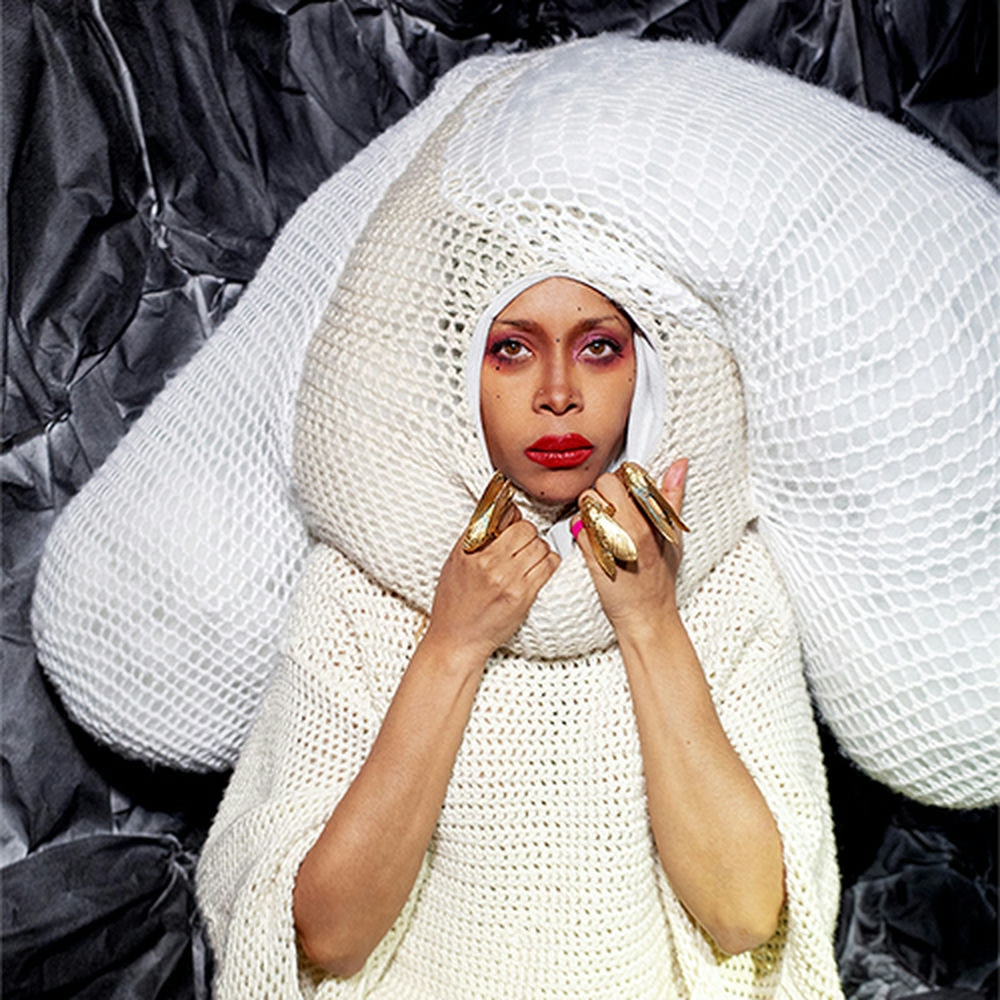
Erykah Badu
1971 –

There is a language that pre-existed English, that pre-existed any European tongue, that lives in the space between spoken word and song. Erykah Badu found it before she found the radio. She was born February 26, 1971 in Dallas, Texas, into a household where the theater was the church and the church was the theater.

0:30
0:30
0:30
0:30

Her mother gave her the name and the fearlessness to go with it. By the time she emerged in the late 1990s, the landscape of R&B had been flattened by materialism and male producers who treated women's voices like samples to be looped. Badu walked into that room wearing a headwrap and carrying a philosophy degree from the school of life, and she did not ask for permission.

The cost of being Erykah Badu has been the cost of being too early for every conversation she started. She dropped "On & On 0:30" in 1997 and the world called it neo-soul, a term she never liked but could not escape. The label gave her a box she was never in. She worked with The Roots, with D'Angelo, with the deepest pockets of Black music. She was pregnant during the making of "Baduizm" and did not hide it. She breastfed on stage. She wore the giant gold slave medallion before it was retro and after it was gauche. Every choice she made was a statement about respectability politics and she made each one with the calm of somebody who knew the ancestors had her back.

Erykah Badu interview 1990

"On & On" is a classic not because of its structure but because of its attitude. The track floats on a groove that sounds like it was recorded in a basement where the only light came from incense. The lyrics are Afrocentric, astrological, unashamedly weird by the standards of 1997 R&B. The song became a hit because the mothership landed and people recognized the sound of home, even if they had never been there.
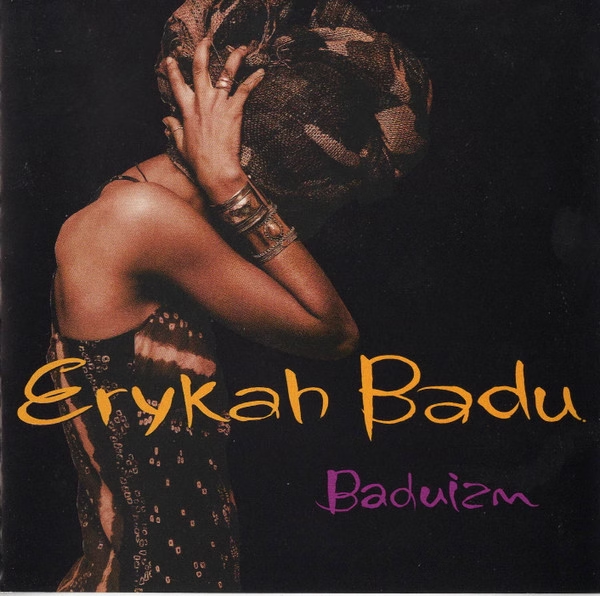
Baduizm (1997)

Badu's work is peak because it does not care about your categories. She made an album about her pregnancy. She made a live album that sounded like a jam session. She made "Window Seat" and got banned from an entire mall. She has always understood that the artist's job is to tell the truth and let the chips fall where they may.

She is still here, still making music on her own terms, still wearing whatever she wants, still the reference point for every young artist who wants to be weird and Black and successful at the same time. The term neo-soul has faded but Badu has not. She taught a generation that you could be an intellectual, a mother, a sex symbol, and a revolutionary in the same body without contradiction. She is the crate that the diggers never stop coming back to. The mothership never left. It just changed frequencies.

Image Credits

1,414 artist portraits across 5 genres (Rock, Jazz, Soul, Blues, Folk). 1,363 sourced from Wikipedia (Creative Commons / Public Domain), 50 from Deezer (promotional artwork).

Full attribution breakdown →

Erykah Badu

1971 –

There is a language that pre-existed English, that pre-existed any European tongue, that lives in the space between spoken word and song. Erykah Badu found it before she found the radio. She was born February 26, 1971 in Dallas, Texas, into a household where the theater was the church and the church was the theater.

0:30
0:30
0:30
0:30

Her mother gave her the name and the fearlessness to go with it. By the time she emerged in the late 1990s, the landscape of R&B had been flattened by materialism and male producers who treated women's voices like samples to be looped. Badu walked into that room wearing a headwrap and carrying a philosophy degree from the school of life, and she did not ask for permission.

The cost of being Erykah Badu has been the cost of being too early for every conversation she started. She dropped "On & On 0:30" in 1997 and the world called it neo-soul, a term she never liked but could not escape. The label gave her a box she was never in. She worked with The Roots, with D'Angelo, with the deepest pockets of Black music. She was pregnant during the making of "Baduizm" and did not hide it. She breastfed on stage. She wore the giant gold slave medallion before it was retro and after it was gauche. Every choice she made was a statement about respectability politics and she made each one with the calm of somebody who knew the ancestors had her back.

Erykah Badu interview 1990

"On & On" is a classic not because of its structure but because of its attitude. The track floats on a groove that sounds like it was recorded in a basement where the only light came from incense. The lyrics are Afrocentric, astrological, unashamedly weird by the standards of 1997 R&B. The song became a hit because the mothership landed and people recognized the sound of home, even if they had never been there.

Baduizm (1997)

Badu's work is peak because it does not care about your categories. She made an album about her pregnancy. She made a live album that sounded like a jam session. She made "Window Seat" and got banned from an entire mall. She has always understood that the artist's job is to tell the truth and let the chips fall where they may.

She is still here, still making music on her own terms, still wearing whatever she wants, still the reference point for every young artist who wants to be weird and Black and successful at the same time. The term neo-soul has faded but Badu has not. She taught a generation that you could be an intellectual, a mother, a sex symbol, and a revolutionary in the same body without contradiction. She is the crate that the diggers never stop coming back to. The mothership never left. It just changed frequencies.

Baduizm (1997) Baduizm (1997)
Baduizm (1997)
Mama’s Gun (2000)
Worldwide Underground (2003)
New Amerykah
Part One (4th World War) (2008)
Part Two (Return of the Ankh) (2010)
But You Caint Use My Phone (2015)
neo-soulr&bsoul
The Sunday Drop
One song. One story. Every Sunday.

No algorithms. No trending sections. Just a song someone loved and the story behind it. Delivered Sunday morning.

Free. No spam. Unsubscribe anytime.

Image Credits

1,414 artist portraits across 5 genres (Rock, Jazz, Soul, Blues, Folk). 1,363 sourced from Wikipedia (Creative Commons / Public Domain), 50 from Deezer (promotional artwork).

Full attribution breakdown →

0:00
0:00