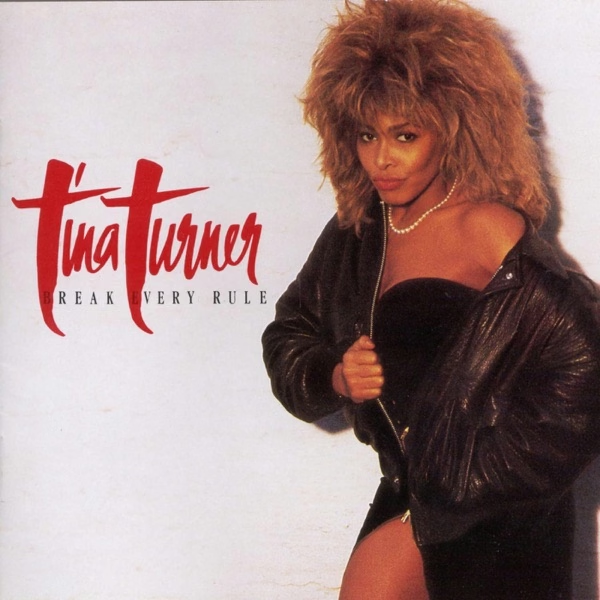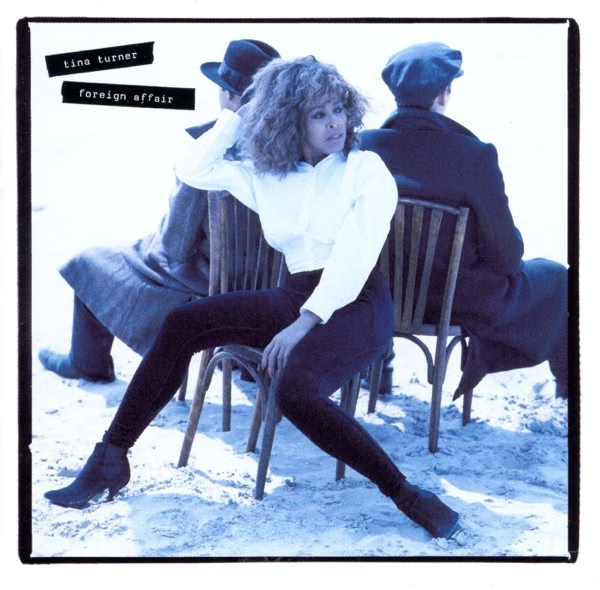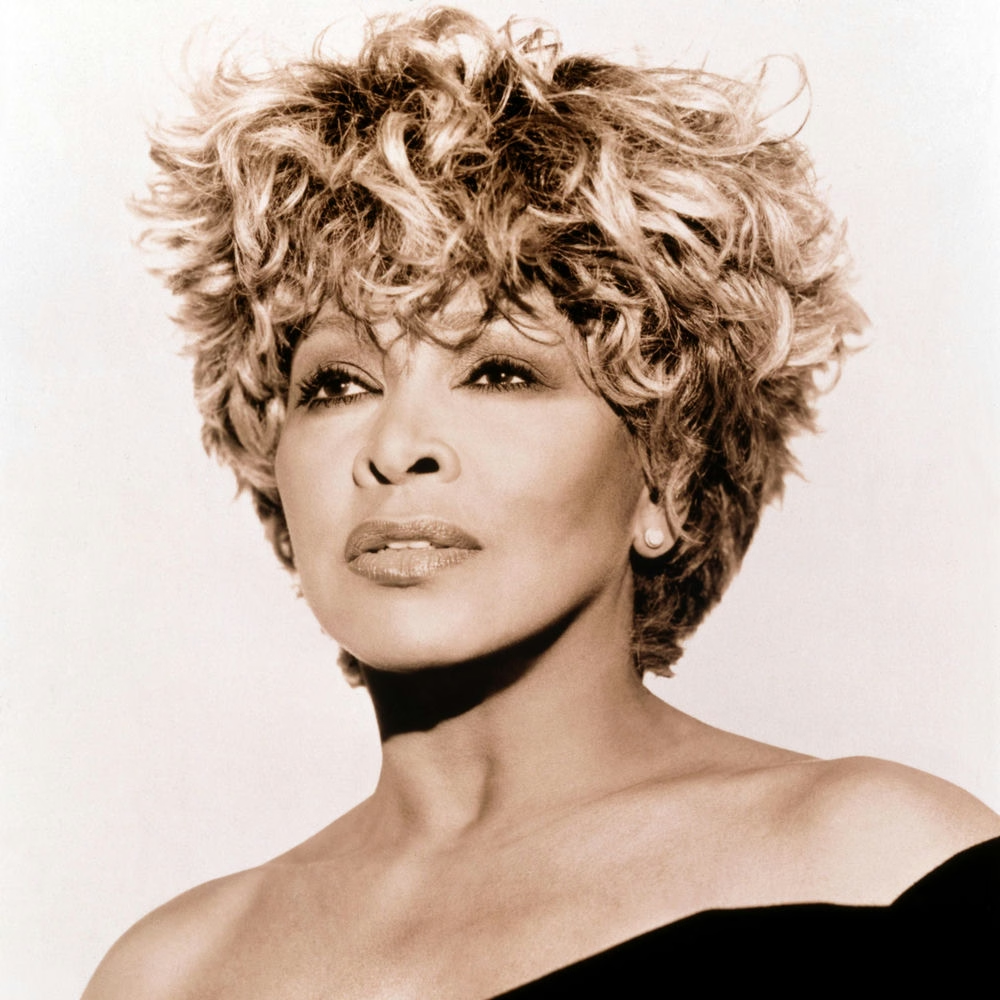
There is no stage big enough for a voice like this. Tina Turner walked out of Nutbush, Tennessee, in 1939 and spent the next sixty years proving that survival is a genre of its own -- rock, soul, R&B, pop, category didn't matter because she was the category. By the time she hit her solo stride in the 1980s, she had already lived through the kind of story that destroys most people and came through it with a voice that sounded like it had been forged, not trained.
The legs that moved across the stage were the same ones that carried her out of hell, and every performance was a declaration of independence.
The cost was Ike Turner. They performed together, they recorded together, and behind the scenes he beat her, controlled her, and nearly broke her. She left him in 1976 with nothing but her name and the conviction that the music belonged to her, not him. The price of exit was years of playing small clubs and cabarets, rebuilding a career that should never have had to be rebuilt. She kept working because there was no other option -- the sweat was real, the damage was real, and the comeback was the most American story she could tell. She walked away from everything and started from zero at an age when most careers are winding down, and the resilience was the point.
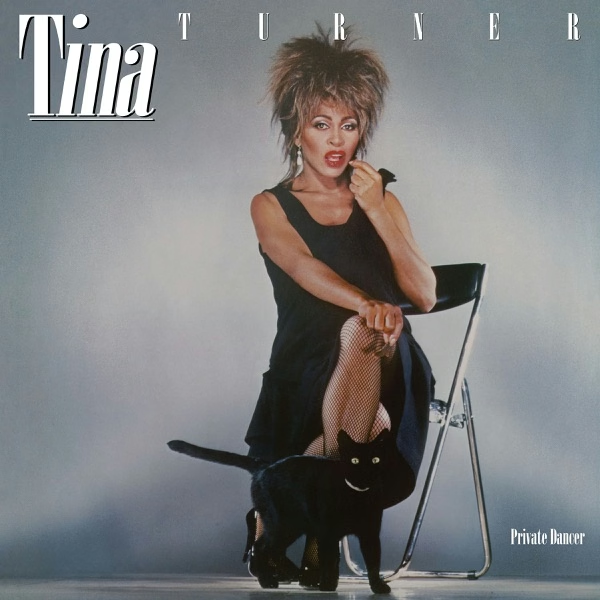
"What's Love Got to Do With It" is the one. That synth opening, the world-weary vocal, the question that became an anthem for anyone who had been hurt enough to stop believing in fairy tales -- it hit number one in 1984 and turned Tina Turner into a global phenomenon at age forty-four. The album "Private Dancer 0:30" sold millions, and suddenly the industry that had written her off was scrambling for a piece of what she had always been. She won Grammys, sold out arenas, and did it all on her own terms.
The voice that Ike tried to control became the thing that freed her. The energy of her live shows was legendary because she had something to prove every single night, and she proved it with every note.
Tina Turner died in 2023 in Kusnacht, Switzerland, but the arc of her life is the blueprint for every artist who has ever had to rebuild from rubble. She showed that a second act could be bigger than the first, that survival was its own kind of victory, and that a woman from Nutbush could become the biggest touring act in the world. The pocket she occupied in the eighties was wider and deeper than anything she had access to with Ike. She didn't just overcome -- she became the one, and that's the legacy, the mothership, what happens when a voice refuses to be silenced.
Tina Turner was profiled in the documentary, What's Love Got to Do with It, in 1993.