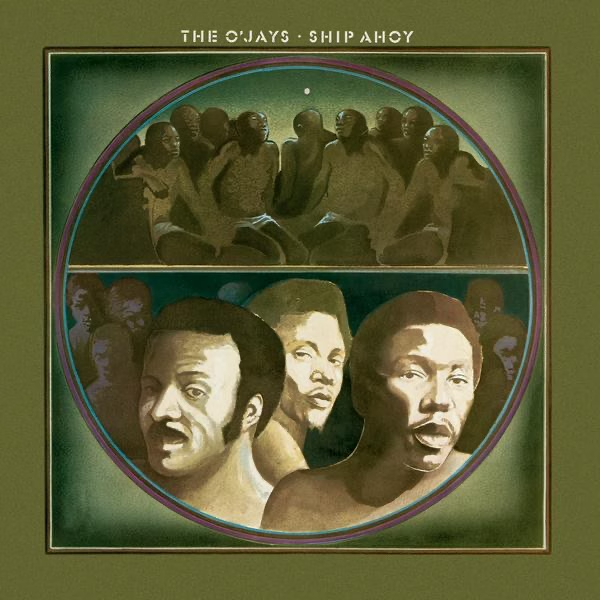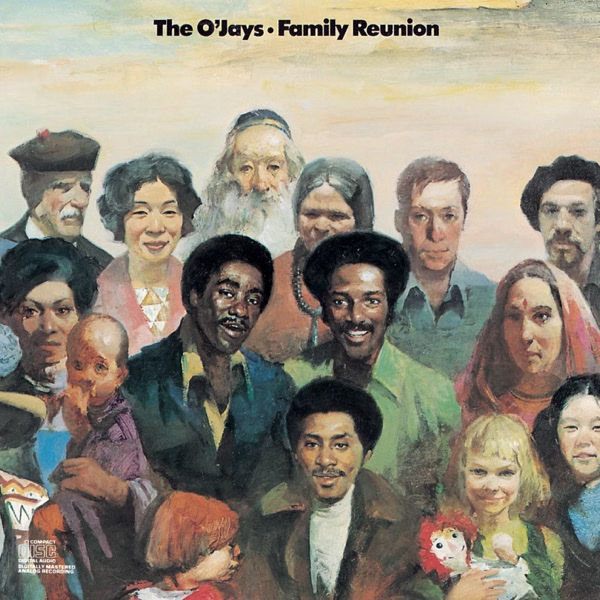
The train is moving before you see it. "Love Train 0:30" rolls out of Philadelphia in 1972 with a message so simple it sounds like a dare -- people all over the world, join hands -- and somehow it works, because the groove underneath it makes the idea feel possible. The O'Jays from Canton, Ohio, found each other in 1958 and spent the next decade learning how to become a single organism.
By the time they linked with Kenny Gamble and Leon Huff's Philadelphia International Records, they had turned into something the city had never heard before: a vocal group that could carry both the velvet and the concrete of the street. That rare balance defined their entire run.
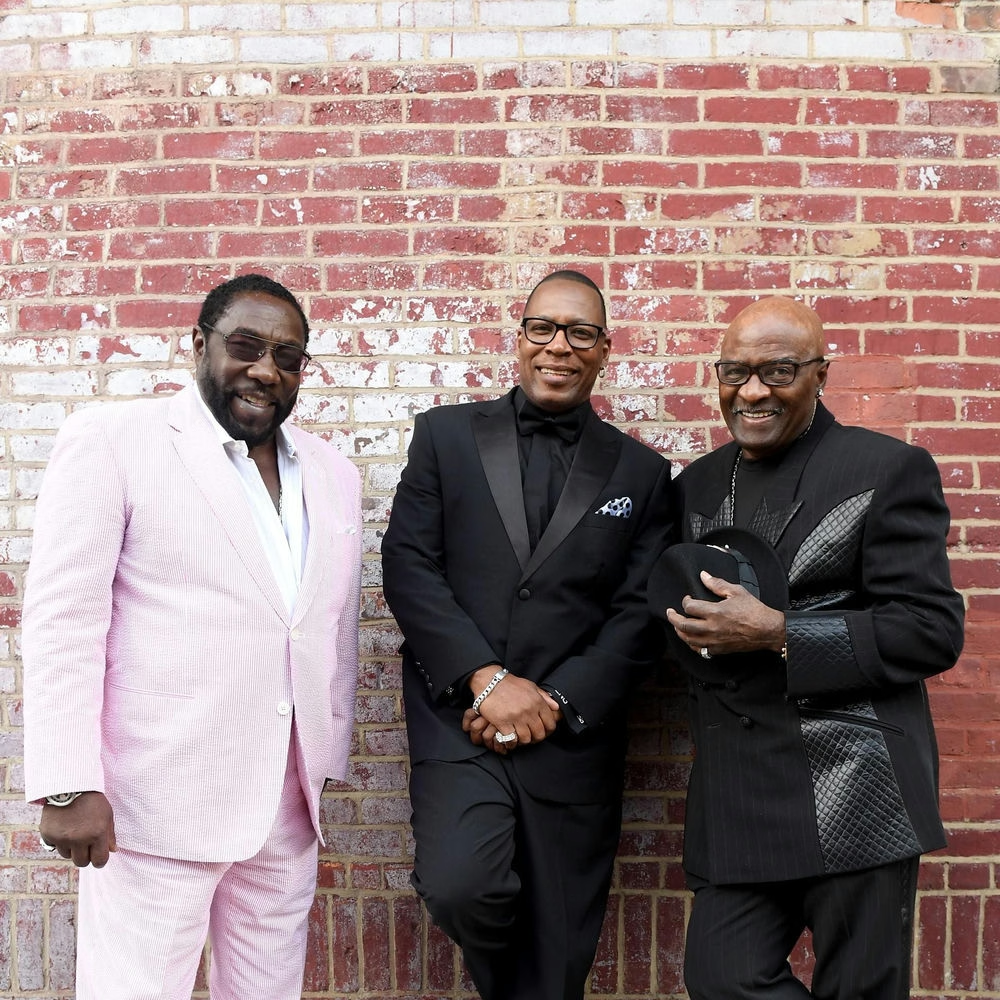
The cost came early and stayed late. Eddie Levert, Walter Williams, William Powell -- three voices that had to learn to breathe as one heart. Philly soul demanded precision: the strings had to be lush, the horns had to hit like punctuation, and the vocals had to carry a working-class honesty that Motown's polish couldn't touch. The O'Jays became the voice of that sound, the instrument through which Gamble and Huff delivered their message of love and struggle. The road was long, the money was slow at first, and they watched groups around them rise and fall while they kept the pocket alive. When Powell died in 1977, the group had to decide if the sound could survive without one of its founders -- it did, but the weight of that loss never fully lifted.
"Love Train" is the mothership. That opening piano, the horns that sweep in like a sunrise, Levert's voice pulling you onto the car -- it's Philly soul at its highest altitude. The song became a number-one hit and a cultural shorthand for the optimism that the early seventies still believed in. But the O'Jays were more than one train: "Back Stabbers 0:30" with its paranoid groove, "For the Love of Money 0:30" with that bass line that became the theme of a generation of hip-hop, "I Love Music 0:30" with its extended jam -- they stacked hits the way the city stacked row houses, each one solid and built to last.
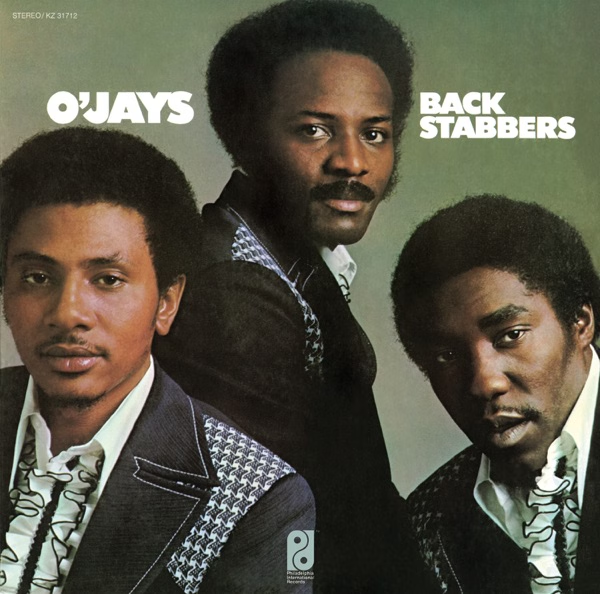
They sang about the hustle and the heartbreak with equal intensity, because one didn't work without the other. Every track carried the weight of lived experience.
The group is still alive, still out there, and that says something about the durability of what they built. Eddie Levert still carries that voice, that conviction, that refusal to let the era end. The O'Jays made Philly soul mean something beyond a regional sound -- they made it a language of struggle and celebration that crossed every boundary the industry tried to put up. They boarded that train in 1958 and somehow never got off. That's the pocket, the one, the sound of three men who learned to breathe as one.