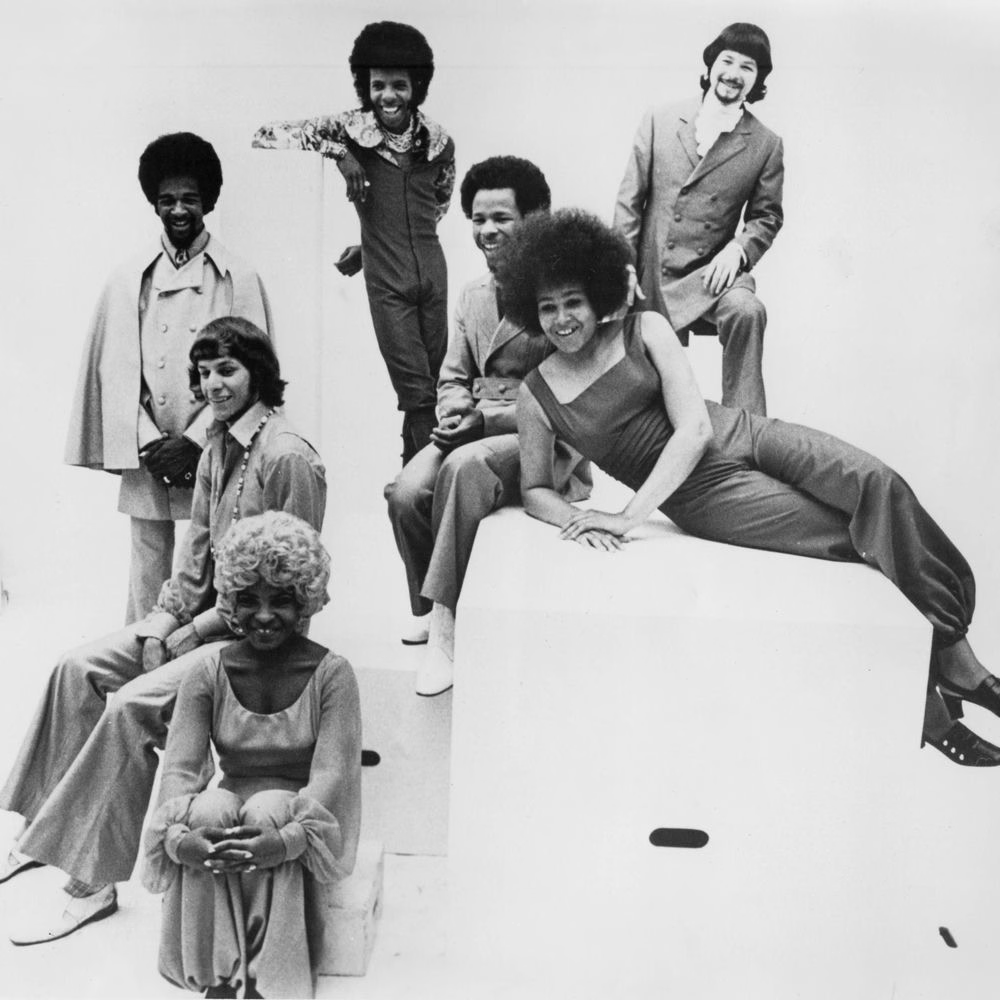
The band looked like the future arriving two decades early. Black, white, men, women, all on one stage, all playing one groove, all chanting one message: it doesn't matter who you are, get up and dance. Sly & The Family Stone didn't just integrate rock and soul -- they integrated America, at least for the three minutes of every single they released.
The band was a rainbow coalition armed with bass bombs and brass punches, and they turned every performance into a riot of joy that made the revolution feel like a party. The music was the argument, and the argument was irrefutable.
Formed in San Francisco in 1966, the group was the brainchild of Sly Stone, a former radio DJ and record producer who understood pop structure and funk dynamics better than almost anyone alive. He pulled together his brother Freddie on guitar, his sister Rose on keyboards, Larry Graham on bass, Cynthia Robinson on trumpet, and Jerry Martini on saxophone. The lineup was unprecedented -- multiracial, co-ed, a living argument for the revolution the hippies were talking about but couldn't pull off. Sly produced the records himself, layering sounds and stacking voices into a mix that exploded out of every transistor radio. The cost was the pressure of being the symbol of a movement, the weight of representing a future that most of the country wasn't ready for. The band carried that weight until it broke them, but the music never broke.
"Family Affair 0:30" was the band's biggest hit, a number one single in 1971 that proved the Family could shift gears from the peak-time funk of "Thank You (Falettinme Be Mice Elf Agin) 0:30" into something slower, darker, and more intimate. The track used a drum machine, one of the first pop records to do so, and Sly's vocal floated over a bed of electric piano and synthesizer like a sermon delivered from the bottom of a well. The message was about family in all its complications -- love, betrayal, the ties that bind even when they hurt. The song felt like a new direction for the band and for Black pop music as a whole, a turn inward that deepened the conversation and proved the Family had range no one expected.
The group dissolved in 1983, casualties of the same excesses that had fueled their peak. But the blueprint they left is still being followed. Every funk band that integrates its lineup, every producer who uses the studio as an instrument, every artist who understands that politics and pleasure can occupy the same dance floor -- they're all borrowing from the Family. Sly Stone saw a world that didn't exist yet and built a band to prove it could.
Sly & The Family Stone was profiled in the documentary, Sly Lives!, in 2025.