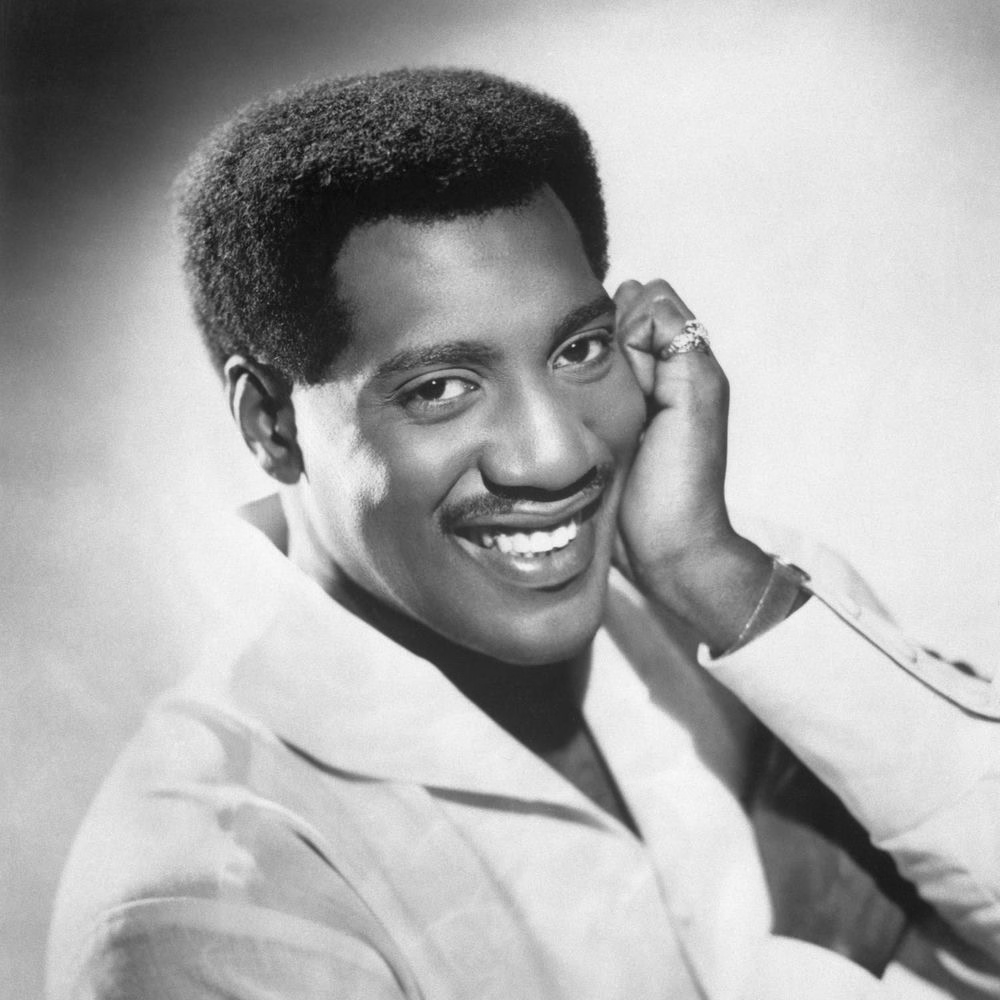
Otis Redding
1941 – 1967 (26)
The Man Who Ran Out of Time

He was 26 years old and he'd just written the most peaceful song of his life. Three days later, his plane went down in Lake Monona, Wisconsin. The Bar-Kays, his teenage backing band, lost four members.

0:30
0:30
0:30
0:30

Otis Redding was pulled from the water, and (Sittin' On) The Dock of the Bay became his first number one. He never heard it on the radio.

A big man with a bigger voice -- a gritty, pleading, exultant baritone that sounded like it was tearing itself apart and rebuilding itself in the same phrase. He grew up in Macon, Georgia, the son of a Baptist deacon, and started singing in the church before he could read. He dropped out of high school at 15 to support his family after his father got sick. He drove 300 miles from Macon to Memphis in 1962 to audition for Stax Records, and they put him behind the wheel as a driver first -- chauffeuring the studio musicians, running errands, watching the sessions and waiting. Then they let him sing. These Arms of Mine 0:30 was cut in the last 20 minutes of a Johnny Jenkins session, with Booker T. Jones on organ and Steve Cropper on guitar, and it became a regional hit. Stax had found its greatest voice.

Otis Redding interview 1990

What followed was a five-year run that defined Southern soul. Mr. Pitiful. I've Been Loving You Too Long 0:30.

Respect -- his song first, before Aretha flipped it. Try a Little Tenderness 0:30, which starts as a croon and ends as a scream, Otis building from a whisper to a full-throated roar over four minutes. He wrote his own material, produced his own sessions, and at the Monterey Pop Festival in June 1967, he introduced himself to a white hippie audience that had never heard anything like him -- a Black man from Georgia in a green suit, backed by Booker T. & the M.G.'s, singing I've Been Loving You Too Long while the crowd sat stunned. They gave him a standing ovation. He'd crossed over without compromising a note.

(Sittin' On) The Dock of the Bay was something new -- reflective, gentle, a song about watching the ships roll in and feeling the world pass by. It had whistling. It had the sound of waves. Steve Cropper finished the mix after Otis died, adding the seagull sounds from a sound effects library. The song spent four weeks at number one. It won two Grammys. It's been covered by everyone. But Otis Redding's original is the one -- the sound of a man at peace with himself, recorded three days before his plane hit the water. He was 26. The cargo door failed, or the engine iced over, or the pilot misjudged the descent -- nobody knows for sure. What's certain is that Otis Redding was just getting started. The voice was still climbing.

Otis Redding was profiled in the documentary, Respect Yourself: The Story of Otis Redding, in 2013.

Image Credits

1,414 artist portraits across 5 genres (Rock, Jazz, Soul, Blues, Folk). 1,363 sourced from Wikipedia (Creative Commons / Public Domain), 50 from Deezer (promotional artwork).

Full attribution breakdown →

Otis Redding

1941 – 1967 (26)
The Man Who Ran Out of Time

He was 26 years old and he'd just written the most peaceful song of his life. Three days later, his plane went down in Lake Monona, Wisconsin. The Bar-Kays, his teenage backing band, lost four members.

0:30
0:30
0:30
0:30

Otis Redding was pulled from the water, and (Sittin' On) The Dock of the Bay became his first number one. He never heard it on the radio.

A big man with a bigger voice -- a gritty, pleading, exultant baritone that sounded like it was tearing itself apart and rebuilding itself in the same phrase. He grew up in Macon, Georgia, the son of a Baptist deacon, and started singing in the church before he could read. He dropped out of high school at 15 to support his family after his father got sick. He drove 300 miles from Macon to Memphis in 1962 to audition for Stax Records, and they put him behind the wheel as a driver first -- chauffeuring the studio musicians, running errands, watching the sessions and waiting. Then they let him sing. These Arms of Mine 0:30 was cut in the last 20 minutes of a Johnny Jenkins session, with Booker T. Jones on organ and Steve Cropper on guitar, and it became a regional hit. Stax had found its greatest voice.

Otis Redding interview 1990

What followed was a five-year run that defined Southern soul. Mr. Pitiful. I've Been Loving You Too Long 0:30.

Respect -- his song first, before Aretha flipped it. Try a Little Tenderness 0:30, which starts as a croon and ends as a scream, Otis building from a whisper to a full-throated roar over four minutes. He wrote his own material, produced his own sessions, and at the Monterey Pop Festival in June 1967, he introduced himself to a white hippie audience that had never heard anything like him -- a Black man from Georgia in a green suit, backed by Booker T. & the M.G.'s, singing I've Been Loving You Too Long while the crowd sat stunned. They gave him a standing ovation. He'd crossed over without compromising a note.

(Sittin' On) The Dock of the Bay was something new -- reflective, gentle, a song about watching the ships roll in and feeling the world pass by. It had whistling. It had the sound of waves. Steve Cropper finished the mix after Otis died, adding the seagull sounds from a sound effects library. The song spent four weeks at number one. It won two Grammys. It's been covered by everyone. But Otis Redding's original is the one -- the sound of a man at peace with himself, recorded three days before his plane hit the water. He was 26. The cargo door failed, or the engine iced over, or the pilot misjudged the descent -- nobody knows for sure. What's certain is that Otis Redding was just getting started. The voice was still climbing.

Otis Redding was profiled in the documentary, Respect Yourself: The Story of Otis Redding, in 2013.

Pain in My Heart (1964)
Otis Blue / Otis Redding Sings Soul (1965)
The Great Otis Redding Sings Soul Ballads (1965)
Complete & Unbelievable: The Otis Redding Dictionary of Soul (1966)
The Soul Album (1966)
King & Queen (1967)
The Immortal Otis Redding (1968)
Love Man (1969)
Tell the Truth (1970)
souldeep soul
The Sunday Drop
One song. One story. Every Sunday.

No algorithms. No trending sections. Just a song someone loved and the story behind it. Delivered Sunday morning.

Free. No spam. Unsubscribe anytime.

Image Credits

1,414 artist portraits across 5 genres (Rock, Jazz, Soul, Blues, Folk). 1,363 sourced from Wikipedia (Creative Commons / Public Domain), 50 from Deezer (promotional artwork).

Full attribution breakdown →

0:00
0:00