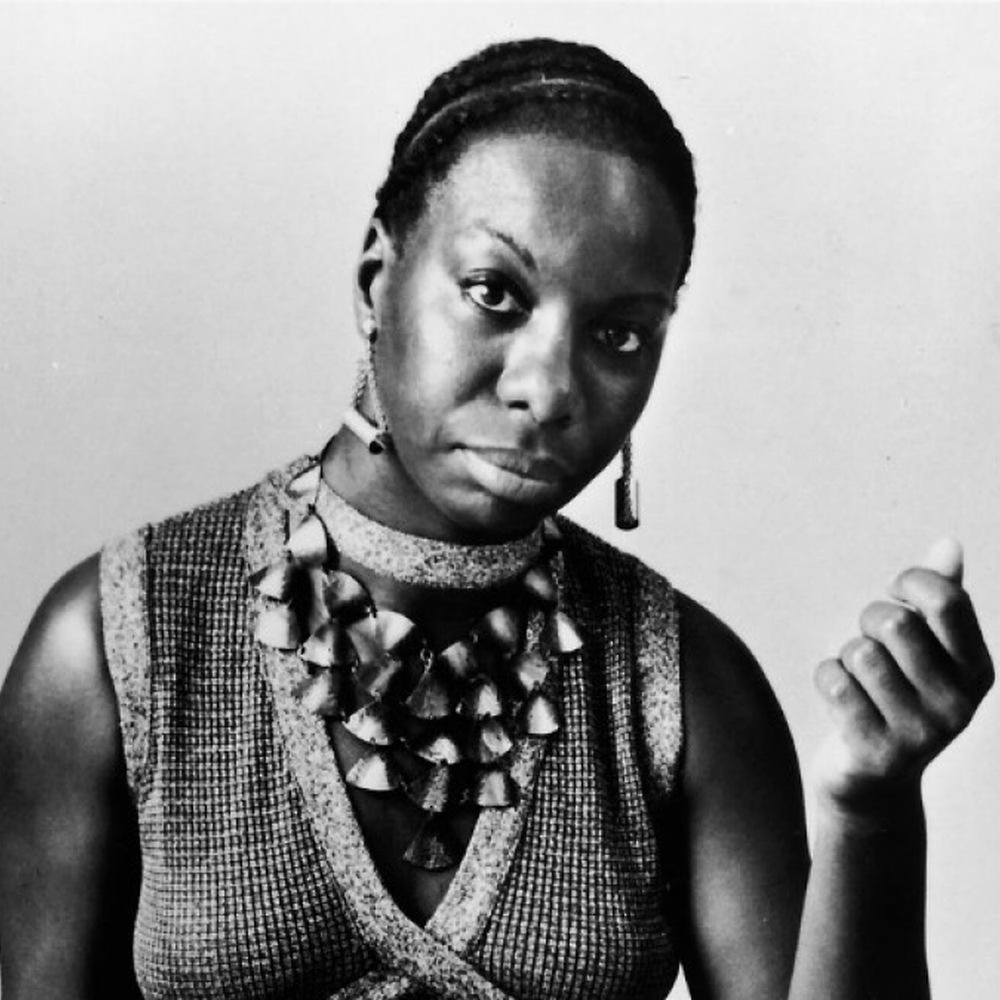
Nina Simone
1933 – 2003 (70)
Mississippi Goddam

The piano bench could barely hold all the thunder. When she sat down, fingers splayed, the keys didn't just sing -- they testified, they wailed, they dragged every sinner in the room to the altar whether they wanted salvation or not. That voice, all grain and gravel and something ancient, could coil around a lullaby and make it a warning.

0:30
0:30
0:30
0:30

Listen close: that's not a performance, that's a revival meeting where the only hymn is truth, and the collection plate is your own surrender. The room never felt empty when she played -- it felt full of ghosts and ancestors and everybody who ever needed to hear somebody tell the truth straight, no chaser.

Eunice Waymon trained for the concert hall -- classical piano, Bach fugues, a scholarship to Juilliard, every note mapped before it left the keybed. She was on a path to become the first Black female classical pianist of international stature, and she had the hands and the discipline to get there. But Philadelphia in the 1950s had other plans -- a Black girl with a diploma couldn't land the classical gigs. So she took the nightclub work, changed her name to Nina Simone, and discovered that the church and the blues room were closer kin than any conservatory let on. The cost of that pivot was the Juilliard dream, the concert hall, the life she had trained for since childhood, but the payout was a sound that owed nothing to anybody. She learned to sing in the gap between what she was trained to be and what the world would let her play.

Nina Simone interview 1990

"Feeling Good" became the calling card, but it never told the whole story. She could make a show tune sound like a field holler and a freedom anthem sound like a knife's edge. Her piano attacked the keys the way a preacher attacks a pulpit -- percussive, relentless, building a groove out of pure insistence. The civil rights movement found its house band in her fingers, and she gave the struggle its soundtrack: "Mississippi Goddam" was the bullet, "Four Women" was the autopsy, "To Be Young, Gifted and Black" was the benediction.
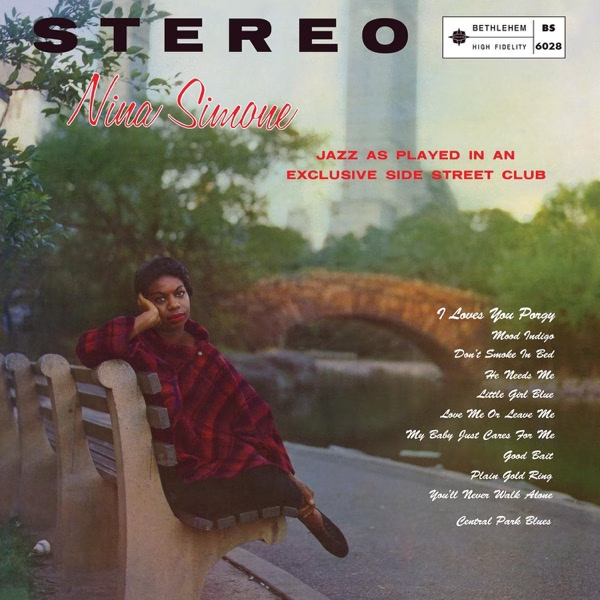
Little Girl Blue (1958)

Every note carried the sweat of the march and the fire of the blackboard. She refused to separate the artist from the activist because there was no separation to be made.

She died in 2003 but the church never closed. Every singer who lets their voice crack open at the wrong time, every player who bends a note past where it belongs, every soul artist who understands that music is first and last a confrontation -- they're all sitting in that front pew. Nina Simone didn't just sing the truth. She cornered it, made it confess, and let it loose on the world. The piano bench is still warm.

Nina Simone was profiled in the documentary, What Happened, Miss Simone?, in 2015.
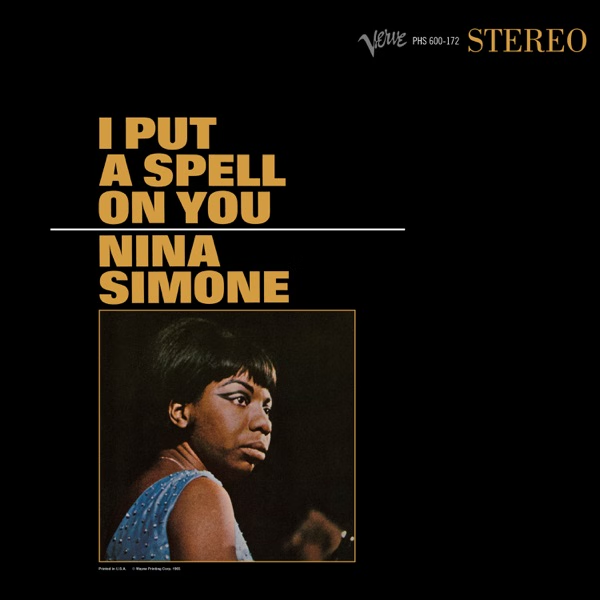
Image Credits

1,414 artist portraits across 5 genres (Rock, Jazz, Soul, Blues, Folk). 1,363 sourced from Wikipedia (Creative Commons / Public Domain), 50 from Deezer (promotional artwork).

Full attribution breakdown →

Nina Simone

1933 – 2003 (70)
Mississippi Goddam

The piano bench could barely hold all the thunder. When she sat down, fingers splayed, the keys didn't just sing -- they testified, they wailed, they dragged every sinner in the room to the altar whether they wanted salvation or not. That voice, all grain and gravel and something ancient, could coil around a lullaby and make it a warning.

0:30
0:30
0:30
0:30

Listen close: that's not a performance, that's a revival meeting where the only hymn is truth, and the collection plate is your own surrender. The room never felt empty when she played -- it felt full of ghosts and ancestors and everybody who ever needed to hear somebody tell the truth straight, no chaser.

Eunice Waymon trained for the concert hall -- classical piano, Bach fugues, a scholarship to Juilliard, every note mapped before it left the keybed. She was on a path to become the first Black female classical pianist of international stature, and she had the hands and the discipline to get there. But Philadelphia in the 1950s had other plans -- a Black girl with a diploma couldn't land the classical gigs. So she took the nightclub work, changed her name to Nina Simone, and discovered that the church and the blues room were closer kin than any conservatory let on. The cost of that pivot was the Juilliard dream, the concert hall, the life she had trained for since childhood, but the payout was a sound that owed nothing to anybody. She learned to sing in the gap between what she was trained to be and what the world would let her play.

Nina Simone interview 1990

"Feeling Good" became the calling card, but it never told the whole story. She could make a show tune sound like a field holler and a freedom anthem sound like a knife's edge. Her piano attacked the keys the way a preacher attacks a pulpit -- percussive, relentless, building a groove out of pure insistence. The civil rights movement found its house band in her fingers, and she gave the struggle its soundtrack: "Mississippi Goddam" was the bullet, "Four Women" was the autopsy, "To Be Young, Gifted and Black" was the benediction.

Little Girl Blue (1958)

Every note carried the sweat of the march and the fire of the blackboard. She refused to separate the artist from the activist because there was no separation to be made.

She died in 2003 but the church never closed. Every singer who lets their voice crack open at the wrong time, every player who bends a note past where it belongs, every soul artist who understands that music is first and last a confrontation -- they're all sitting in that front pew. Nina Simone didn't just sing the truth. She cornered it, made it confess, and let it loose on the world. The piano bench is still warm.

Nina Simone was profiled in the documentary, What Happened, Miss Simone?, in 2015.
Little Girl Blue (1958) Little Girl Blue (1958)
I Put a Spell on You (1965) I Put a Spell on You (1965)
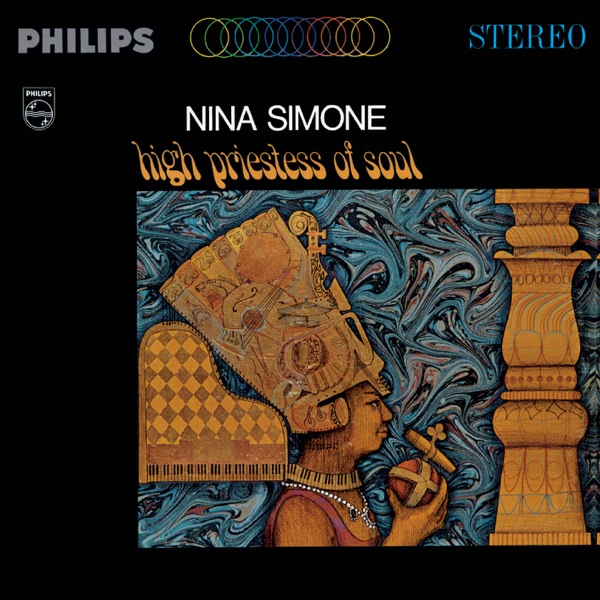
High Priestess of Soul (1967) High Priestess of Soul (1967)
Little Girl Blue (1958)
The Amazing Nina Simone (1959)
Forbidden Fruit (1961)
Nina Simone Sings Ellington (1962)
Broadway Blues Ballads (1964)
Starring Nina Simone with George Wallington (1964)
Pastel Blues (1965)
I Put a Spell on You (1965)
Let It All Out (1965)
Wild Is the Wind (1966)
Nina Simone With Strings (1966)
Nina Simone Sings the Blues (1967)
Silk & Soul (1967)
High Priestess of Soul (1967)
To Love Somebody (1969)
souljazzblues
The Sunday Drop
One song. One story. Every Sunday.

No algorithms. No trending sections. Just a song someone loved and the story behind it. Delivered Sunday morning.

Free. No spam. Unsubscribe anytime.

Image Credits

1,414 artist portraits across 5 genres (Rock, Jazz, Soul, Blues, Folk). 1,363 sourced from Wikipedia (Creative Commons / Public Domain), 50 from Deezer (promotional artwork).

Full attribution breakdown →

0:00
0:00