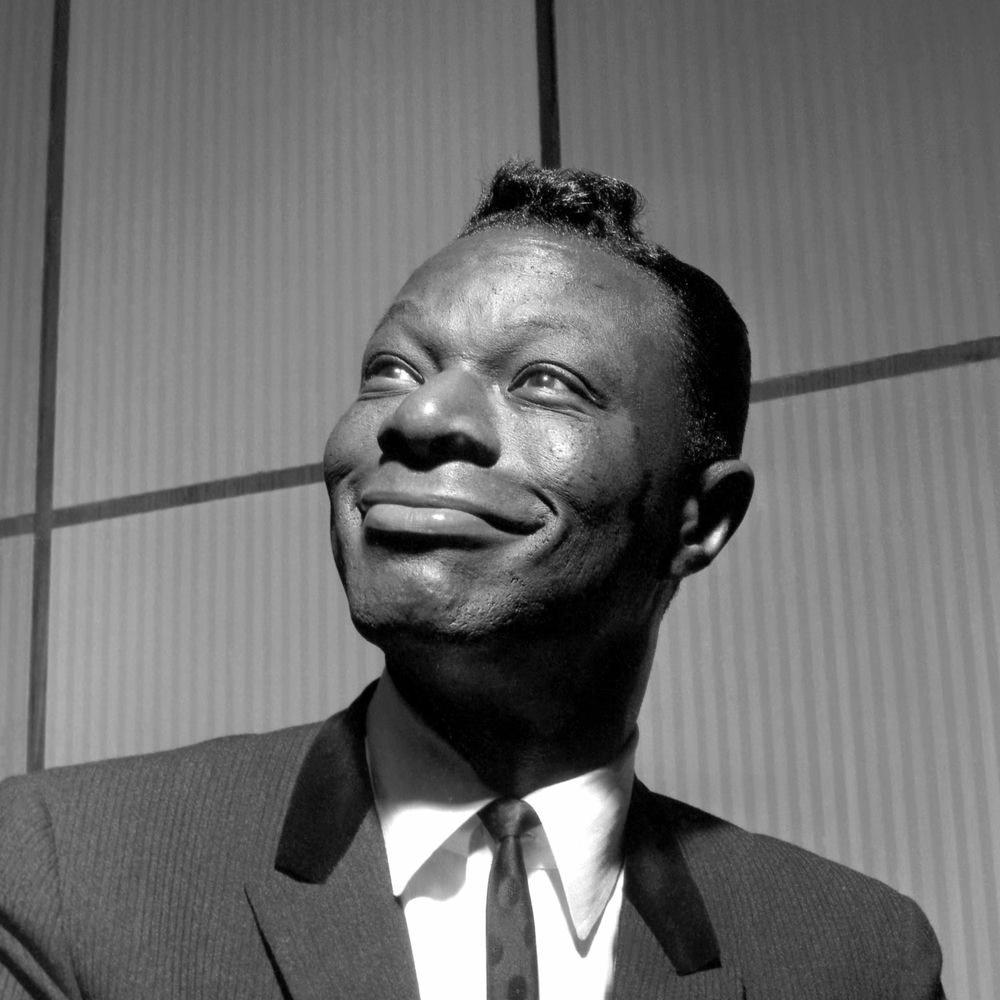
Nat King Cole
1919 – 1965 (46)
The Velvet Piano

The voice that made the whole room go quiet. Nat King Cole -- had a baritone so warm and precise that it sounded like it came from a different world. He was a pianist first and a singer second, but the voice became his monument.

0:30
0:30
0:30
0:30

Three minutes of "Unforgettable" and the world stops spinning. That voice worked across jazz, pop, and blues without ever straining. It just existed, perfect and warm, and you leaned in whether you wanted to or not.

The cost of that voice was the racism he never escaped no matter how famous he became. Cole grew up in Chicago, learned stride piano from Earl Hines, and formed the King Cole Trio in the late 1930s. The trio was an instrumental jazz group that gained a following playing the most exclusive clubs and recording small-group swing that other musicians studied for its precision. Then Cole started singing almost as an afterthought. The hits came immediately -- "Straighten Up and Fly Right," "Route 66," "The Christmas Song." He became the first Black artist to host a national television variety show in 1956. The show lasted one year. Advertisers would not support a Black host. White supremacists attacked him on stage in Birmingham in 1956 while he was singing. He kept performing. He kept smiling. The cost of his calm never showed in his voice, but it was always there beneath the surface.

Nat King Cole interview 1990

"Unforgettable" is the peak -- a ballad so perfectly delivered that it defines the word. The orchestration swells behind him. The vocal floats above it like a memory you cannot place. Cole recorded it in 1951 and it became his signature, the song that would define his legacy across generations.
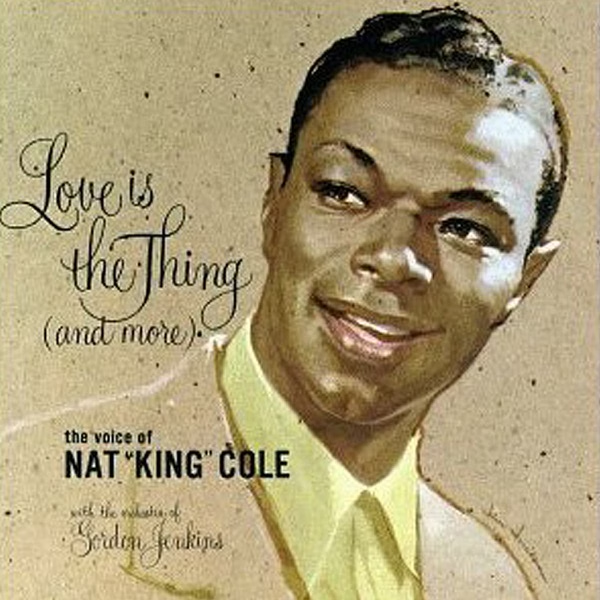
Love Is the Thing (1957)

He recorded over 30 albums and sold over 100 million records worldwide. He acted in films. He influenced everyone from Ray Charles to Stevie Wonder to Frank Sinatra, who said Cole's phrasing taught him how to tell a story. His trio work is still studied by jazz pianists. His ballads are studied by singers. He crossed over from jazz to pop without compromising his artistry, a balance that seemed effortless but required constant negotiation with an industry that wanted his voice without accepting his color.

Nat King Cole cost himself the prime of his career fighting an industry that wanted his talent without his race. He died of lung cancer at 45 years old. The voice stopped too early. He left behind a catalog of songs that are still played at weddings and funerals and quiet nights alone. "Unforgettable" is the truth of its title. Every time it plays, he is still in the room. That is the payoff for a life spent building beauty in the face of ugliness. That is the church he built with three minutes at a time. The walls are still standing.
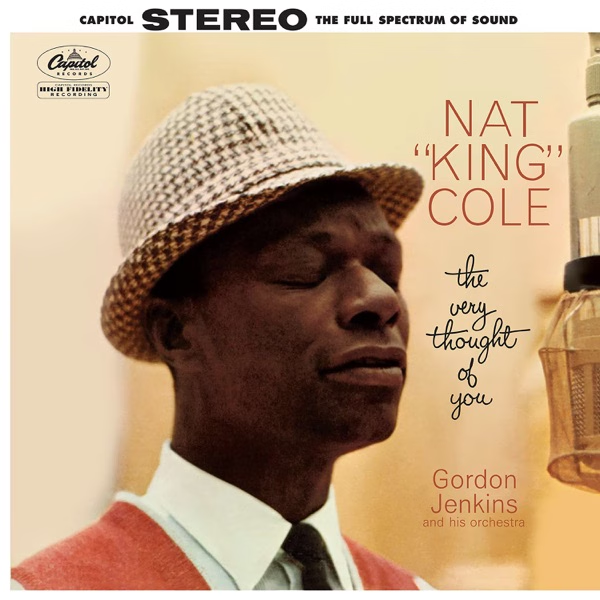

Image Credits

1,414 artist portraits across 5 genres (Rock, Jazz, Soul, Blues, Folk). 1,363 sourced from Wikipedia (Creative Commons / Public Domain), 50 from Deezer (promotional artwork).

Full attribution breakdown →

Nat King Cole

1919 – 1965 (46)
The Velvet Piano

The voice that made the whole room go quiet. Nat King Cole -- had a baritone so warm and precise that it sounded like it came from a different world. He was a pianist first and a singer second, but the voice became his monument.

0:30
0:30
0:30
0:30

Three minutes of "Unforgettable" and the world stops spinning. That voice worked across jazz, pop, and blues without ever straining. It just existed, perfect and warm, and you leaned in whether you wanted to or not.

The cost of that voice was the racism he never escaped no matter how famous he became. Cole grew up in Chicago, learned stride piano from Earl Hines, and formed the King Cole Trio in the late 1930s. The trio was an instrumental jazz group that gained a following playing the most exclusive clubs and recording small-group swing that other musicians studied for its precision. Then Cole started singing almost as an afterthought. The hits came immediately -- "Straighten Up and Fly Right," "Route 66," "The Christmas Song." He became the first Black artist to host a national television variety show in 1956. The show lasted one year. Advertisers would not support a Black host. White supremacists attacked him on stage in Birmingham in 1956 while he was singing. He kept performing. He kept smiling. The cost of his calm never showed in his voice, but it was always there beneath the surface.

Nat King Cole interview 1990

"Unforgettable" is the peak -- a ballad so perfectly delivered that it defines the word. The orchestration swells behind him. The vocal floats above it like a memory you cannot place. Cole recorded it in 1951 and it became his signature, the song that would define his legacy across generations.

Love Is the Thing (1957)

He recorded over 30 albums and sold over 100 million records worldwide. He acted in films. He influenced everyone from Ray Charles to Stevie Wonder to Frank Sinatra, who said Cole's phrasing taught him how to tell a story. His trio work is still studied by jazz pianists. His ballads are studied by singers. He crossed over from jazz to pop without compromising his artistry, a balance that seemed effortless but required constant negotiation with an industry that wanted his voice without accepting his color.

Nat King Cole cost himself the prime of his career fighting an industry that wanted his talent without his race. He died of lung cancer at 45 years old. The voice stopped too early. He left behind a catalog of songs that are still played at weddings and funerals and quiet nights alone. "Unforgettable" is the truth of its title. Every time it plays, he is still in the room. That is the payoff for a life spent building beauty in the face of ugliness. That is the church he built with three minutes at a time. The walls are still standing.

Love Is the Thing (1957) Love Is the Thing (1957)
The Very Thought of You (1958) The Very Thought of You (1958)
King Cole at the Piano (1949)
Unforgettable (1952)
Sings for Two in Love (1953)
Just One of Those Things (1957)
Love Is the Thing (1957)
This Is Nat “King” Cole (1957)
The Very Thought of You (1958)
Cole español (1958)
St. Louis Blues (1958)
Welcome to the Club (1959)
A mis amigos (1959)
To Whom It May Concern (1959)
Every Time I Feel the Spirit (1960)
The Christmas Song (1960)
Tell Me All About Yourself (1960)
jazzpopblues
The Sunday Drop
One song. One story. Every Sunday.

No algorithms. No trending sections. Just a song someone loved and the story behind it. Delivered Sunday morning.

Free. No spam. Unsubscribe anytime.

Image Credits

1,414 artist portraits across 5 genres (Rock, Jazz, Soul, Blues, Folk). 1,363 sourced from Wikipedia (Creative Commons / Public Domain), 50 from Deezer (promotional artwork).

Full attribution breakdown →

0:00
0:00