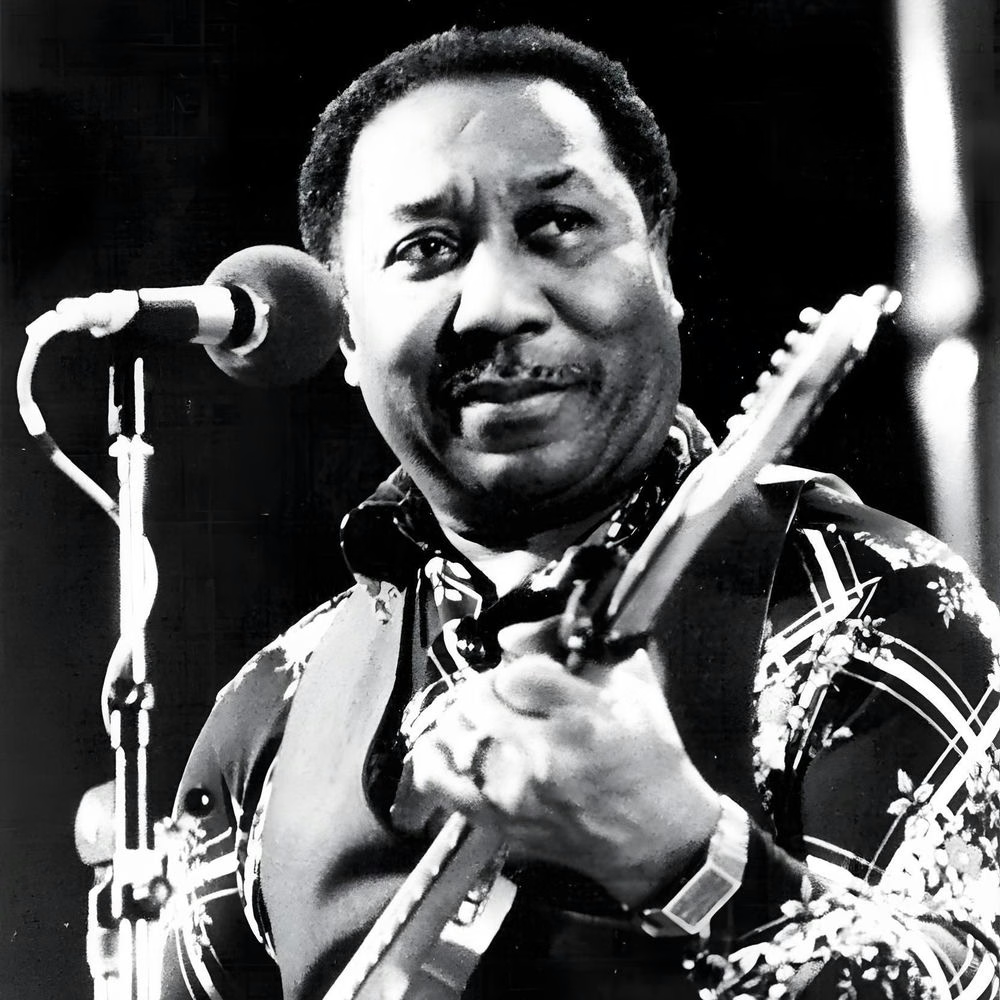
The sound of a guitar plugged into an amp and pointed straight at God. Muddy Waters -- took the Delta blues and electrified it until it became the sound of Chicago. He did not invent electric blues.
He just made it so powerful that nothing before it mattered as much. That distorted guitar tone, that rhythmic churn, that voice that sounded like the Mississippi had risen up and learned to sing.
The cost of that power was the Delta itself. Muddy grew up on Stovall Plantation, learned guitar from Son House and from the records of Robert Johnson that circulated on old 78s. He played house parties for pocket change and worked the land for wages that barely kept him alive. He moved to Chicago in 1943 and found a city full of migrants with the same hunger and the same memories. He got a day job in a paper factory. He played clubs at night. He bought an electric guitar because the acoustic could not compete with the noise of the crowded Chicago rooms. He cut "I Can't Be Satisfied" in 1948 and the Chess brothers heard it. The rest is the Chicago blues canon. But the contract was rough. Chess paid him flat session fees for years. The hits came -- "Hoochie Coochie Man," "Mannish Boy," "Rollin' Stone" -- but the money stayed with the label.
"I'm Your Hoochie Coochie Man" is the peak -- a song written by Willie Dixon that Muddy turned into a swaggering anthem of masculine power. The riff is simple, two notes that lock into the groove. The groove is deep, a slow roll that feels like it could continue forever. Muddy's voice is a rumble from the bottom of the Mississippi River.
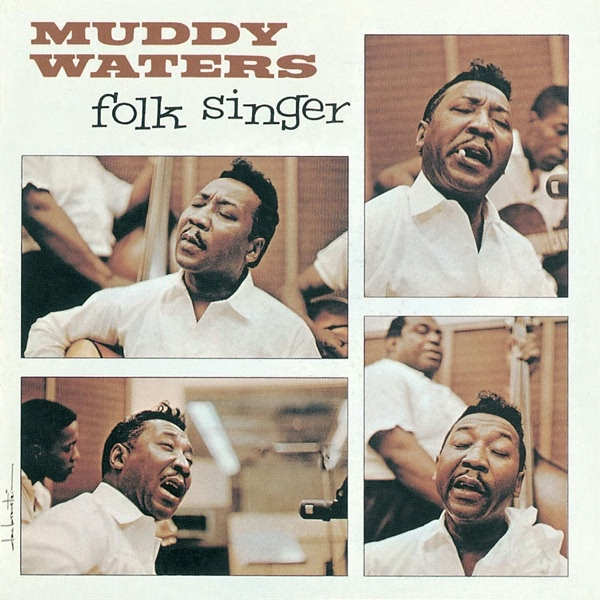
He built a band that included Little Walter on harmonica and had Howlin' Wolf as a rival who pushed him harder. The records from the 1950s are the bedrock of everything that came after -- the Rolling Stones took their name from his song "Rollin' Stone." Every British blues band of the 1960s learned their craft from his Chess recordings, note for note.
Muddy Waters cost himself comfort in the Delta and fair pay in Chicago. He left behind a catalog that is the Old Testament of rock and roll. Listen to "Hoochie Coochie Man" and hear where the Rolling Stones, Eric Clapton, and Led Zeppelin stole their moves. That is not a criticism. That is the truth of how influence works. Every riff, every swagger, every electric blues band that ever locked into a groove from one to four -- they are all living in Muddy's pocket. He paid the cost in sweat and silence from the labels. He built the church and electrified the altar.
Muddy Waters was profiled in the documentary, Muddy Waters: The Mojo Man.