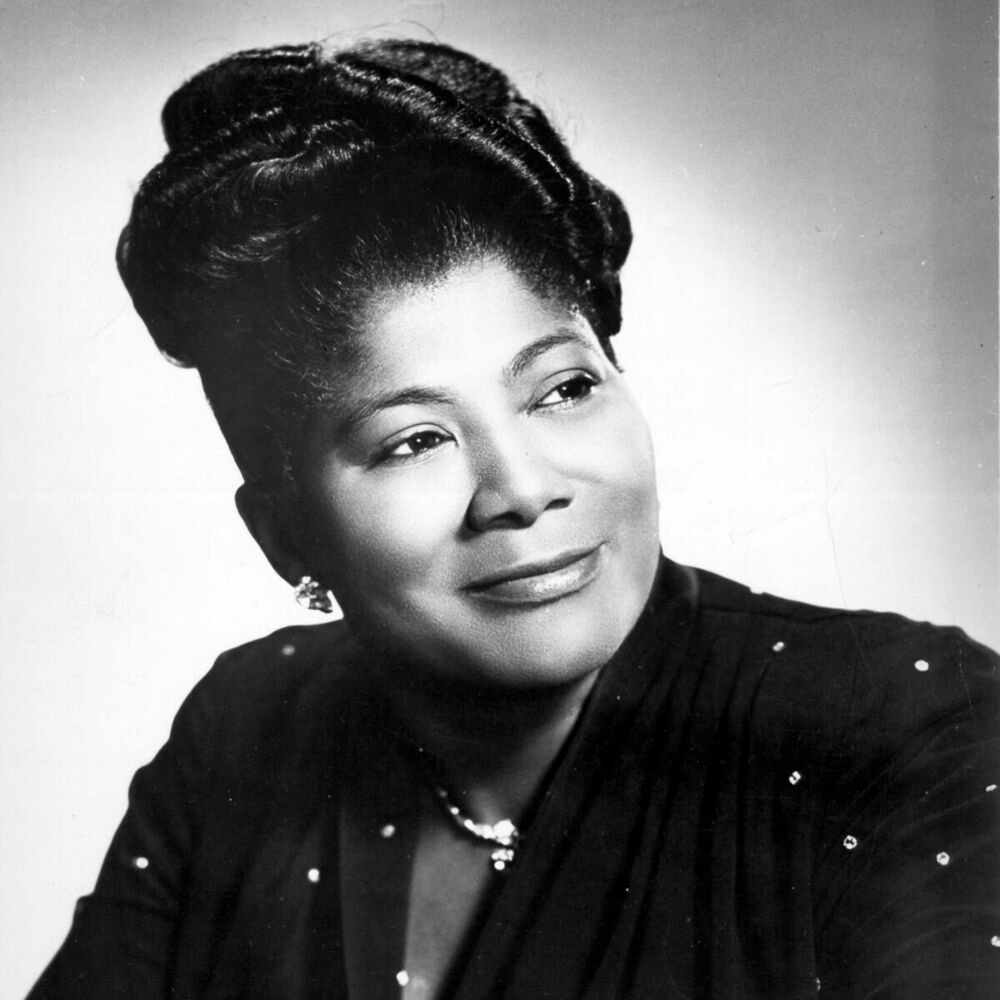
Mahalia Jackson
1911 – 1972 (61)

She was born in a shotgun house on Water Street in New Orleans, in 1911, and the first sound she heard was the gospel choir at Plymouth Rock Baptist Church. Mahalia Jackson sang before she could talk -- or so the story goes, and nobody who heard her ever doubted it. By the time she was 16, she'd left the South for Chicago, joining the Greater Salem Baptist Church choir.

0:30
0:30
0:30
0:30

She tried secular music once. A record label offered her a blues contract. She turned it down. "I'll stick with God," she said. She meant it for the rest of her life.

The move to Chicago was the turning point. The Great Migration was pulling Black families out of the South by the hundreds of thousands, and Mahalia was part of that current -- a 16-year-old with a contralto that could shake a storefront church's windows. She sang at funerals, at revivals, at the National Baptist Convention. She met Thomas A. Dorsey, the father of gospel, and learned his songs note for note. Dorsey said she was the only singer who understood what his music was supposed to do -- not entertain, but testify. Her first recording for Decca, "God Gonna Separate the Wheat From the Tares," sold well enough. But it was her 1947 recording of "Move On Up a Little Higher 0:30" for the indie Apollo label that changed everything. It sold over a million copies. In 1947. A gospel record. Nobody had seen anything like it.

Mahalia Jackson interview 1990

She used her voice the way Dr. King used a pulpit -- as an instrument of change. At the 1963 March on Washington, after King's "I Have a Dream" speech, the crowd was restless and the program was running long. Mahalia stepped up to the microphone unannounced and sang "How I Got Over 0:30." The crowd stopped moving.
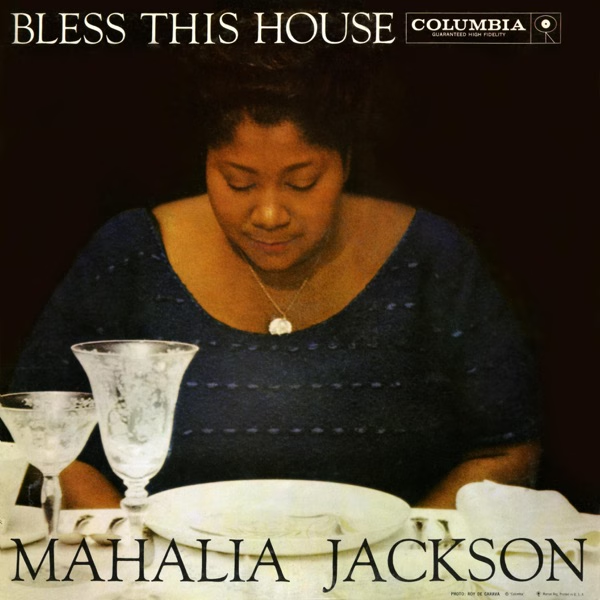
Bless This House (1956)

The hot August sun kept beating down, and she opened her mouth, and the sound that came out was older than America. She sang at King's funeral five years later. By then she was the Queen of Gospel, but the title undersells what she actually was -- the woman who taught Black America that its grief was worthy of song. She toured Europe, sang at Carnegie Hall, packed stadiums in Africa. She mentored Aretha Franklin, who grew up watching her from the pews of her father's church. She opened doors for gospel that nobody had thought could open.

She died in 1972 at 60, of heart failure complicated by diabetes. The funeral was in Chicago, and 50,000 people filed past her casket. The Queen of Gospel is a convenient title but it misses the point. Mahalia Jackson didn't rule a genre. She proved that the Black church's music -- that ecstatic, moaning, hallelujah sound born in storefronts and shotgun houses -- could fill any room in the world and make everyone in it feel the same thing at the same time. You hear her in every gospel choir that ever made a secular audience weep. You hear her in the way Black women singers open their mouths and let the full weight of their history come through.
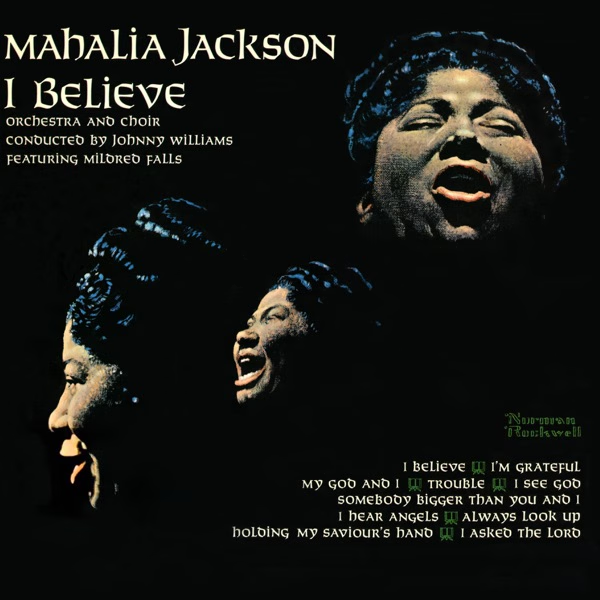
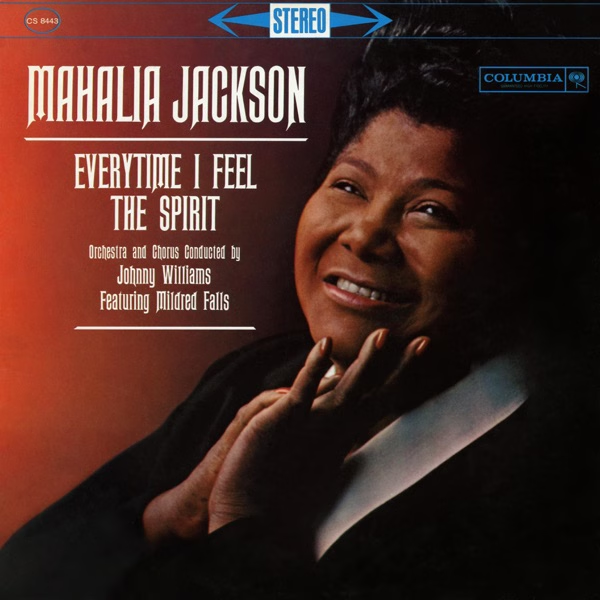
Image Credits

1,414 artist portraits across 5 genres (Rock, Jazz, Soul, Blues, Folk). 1,363 sourced from Wikipedia (Creative Commons / Public Domain), 50 from Deezer (promotional artwork).

Full attribution breakdown →

Mahalia Jackson

1911 – 1972 (61)

She was born in a shotgun house on Water Street in New Orleans, in 1911, and the first sound she heard was the gospel choir at Plymouth Rock Baptist Church. Mahalia Jackson sang before she could talk -- or so the story goes, and nobody who heard her ever doubted it. By the time she was 16, she'd left the South for Chicago, joining the Greater Salem Baptist Church choir.

0:30
0:30
0:30
0:30

She tried secular music once. A record label offered her a blues contract. She turned it down. "I'll stick with God," she said. She meant it for the rest of her life.

The move to Chicago was the turning point. The Great Migration was pulling Black families out of the South by the hundreds of thousands, and Mahalia was part of that current -- a 16-year-old with a contralto that could shake a storefront church's windows. She sang at funerals, at revivals, at the National Baptist Convention. She met Thomas A. Dorsey, the father of gospel, and learned his songs note for note. Dorsey said she was the only singer who understood what his music was supposed to do -- not entertain, but testify. Her first recording for Decca, "God Gonna Separate the Wheat From the Tares," sold well enough. But it was her 1947 recording of "Move On Up a Little Higher 0:30" for the indie Apollo label that changed everything. It sold over a million copies. In 1947. A gospel record. Nobody had seen anything like it.

Mahalia Jackson interview 1990

She used her voice the way Dr. King used a pulpit -- as an instrument of change. At the 1963 March on Washington, after King's "I Have a Dream" speech, the crowd was restless and the program was running long. Mahalia stepped up to the microphone unannounced and sang "How I Got Over 0:30." The crowd stopped moving.

Bless This House (1956)

The hot August sun kept beating down, and she opened her mouth, and the sound that came out was older than America. She sang at King's funeral five years later. By then she was the Queen of Gospel, but the title undersells what she actually was -- the woman who taught Black America that its grief was worthy of song. She toured Europe, sang at Carnegie Hall, packed stadiums in Africa. She mentored Aretha Franklin, who grew up watching her from the pews of her father's church. She opened doors for gospel that nobody had thought could open.

She died in 1972 at 60, of heart failure complicated by diabetes. The funeral was in Chicago, and 50,000 people filed past her casket. The Queen of Gospel is a convenient title but it misses the point. Mahalia Jackson didn't rule a genre. She proved that the Black church's music -- that ecstatic, moaning, hallelujah sound born in storefronts and shotgun houses -- could fill any room in the world and make everyone in it feel the same thing at the same time. You hear her in every gospel choir that ever made a secular audience weep. You hear her in the way Black women singers open their mouths and let the full weight of their history come through.

Bless This House (1956) Bless This House (1956)
I Believe (1956) I Believe (1956)
Everytime I Feel the Spirit (1961) Everytime I Feel the Spirit (1961)
The World’s Greatest Gospel Singer (1955)
Bless This House (1956)
I Believe (1956)
Black
Brown and Beige (1958)
Great Gettin’ Up Morning (1959)
Come On Children
Let's Sing (1960)
Everytime I Feel the Spirit (1961)
Great Songs of Love and Faith (1962)
Silent Night (1962)
Mahalia Jackson's Greatest Hits (1963)
Let's Pray Together (1964)
A Mighty Fortress (1968)
Christmas With Mahalia (1968)
Garden of Prayer (1968)
Sings The Gospel Right Out Of The Church (1969)
What The World Needs Now (1969)
Mahalia Jackson (1971)
Live In Antibes
1968 (1988)
Mahalia Jackson Sings America's Favorite Hymns (1989)
Beautiful tomorrow (1990)
Christmas with Mahalia Jackson (1990)
Holy Night (1992)
I'm On My Way (1992)
Just As I Am (1993)
Sings Songs of Christmas (1995)
gospeltraditional gospel
The Sunday Drop
One song. One story. Every Sunday.

No algorithms. No trending sections. Just a song someone loved and the story behind it. Delivered Sunday morning.

Free. No spam. Unsubscribe anytime.

Image Credits

1,414 artist portraits across 5 genres (Rock, Jazz, Soul, Blues, Folk). 1,363 sourced from Wikipedia (Creative Commons / Public Domain), 50 from Deezer (promotional artwork).

Full attribution breakdown →

0:00
0:00