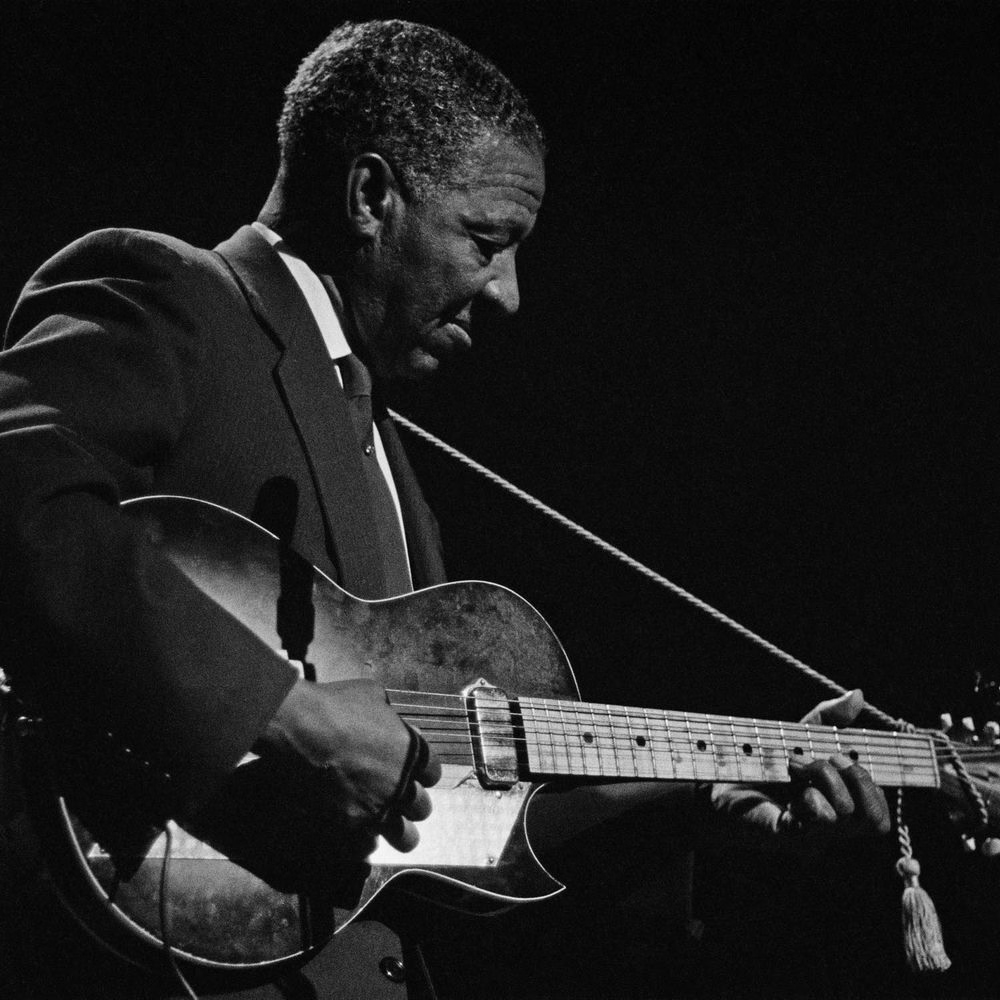
Lonnie Johnson
1899 – 1970 (71)

Lonnie Johnson invented the single-string guitar solo. Before him, the guitar was a rhythm instrument -- strummed, not picked. Lonnie played single-note lines that sang like a horn, bending and slurring notes decades before anyone called it a guitar solo.

0:30
0:30
0:30
0:30

He recorded with Louis Armstrong and Duke Ellington. Every blues, jazz, and rock solo traces back to him.

Alonzo Johnson from New Orleans was a violinist before he was a guitarist, and he brought the violin's melodic sensibility to the six-string. He was a star in the 1920s and 30s -- Tomorrow Night was a hit. He recorded with Eddie Lang, the great white jazz guitarist, in a duo that crossed racial lines in the segregated recording industry. He adapted effortlessly to every shift in popular taste.

The 1950s weren't kind. He worked as a janitor in a Philadelphia hotel, playing occasional gigs. The folk revival rediscovered him in the 1960s. He recorded for Folkways, toured Canada, and finally got some of the recognition he'd always deserved.
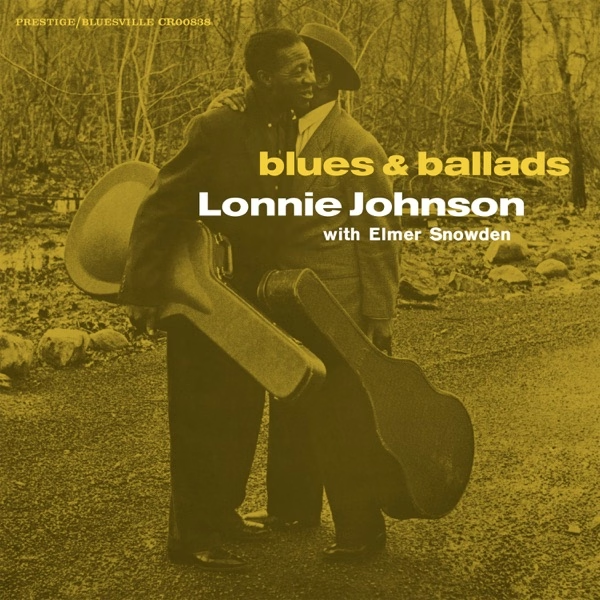
Blues (1947)

He died in 1970. Every guitarist who ever played a solo, from B.B. King to Jimi Hendrix, owes Lonnie Johnson a debt.
Image Credits

1,414 artist portraits across 5 genres (Rock, Jazz, Soul, Blues, Folk). 1,363 sourced from Wikipedia (Creative Commons / Public Domain), 50 from Deezer (promotional artwork).

Full attribution breakdown →

Lonnie Johnson

1899 – 1970 (71)

Lonnie Johnson invented the single-string guitar solo. Before him, the guitar was a rhythm instrument -- strummed, not picked. Lonnie played single-note lines that sang like a horn, bending and slurring notes decades before anyone called it a guitar solo.

0:30
0:30
0:30
0:30

He recorded with Louis Armstrong and Duke Ellington. Every blues, jazz, and rock solo traces back to him.

Alonzo Johnson from New Orleans was a violinist before he was a guitarist, and he brought the violin's melodic sensibility to the six-string. He was a star in the 1920s and 30s -- Tomorrow Night was a hit. He recorded with Eddie Lang, the great white jazz guitarist, in a duo that crossed racial lines in the segregated recording industry. He adapted effortlessly to every shift in popular taste.

The 1950s weren't kind. He worked as a janitor in a Philadelphia hotel, playing occasional gigs. The folk revival rediscovered him in the 1960s. He recorded for Folkways, toured Canada, and finally got some of the recognition he'd always deserved.

Blues (1947)

He died in 1970. Every guitarist who ever played a solo, from B.B. King to Jimi Hendrix, owes Lonnie Johnson a debt.

Blues (1947) Blues (1947)
Blues (1947)
Lonesome Road (1958)
Blues & Ballads (1960)
Losing Game (1961)
Another Night to Cry (1962)
Woman Blues! (1962)
Portraits in Blues
Volume 6: Lonnie Johnson (1963)
Three Kings And The Queen (1964)
Ballads and Jumpin' Jazz (1990)
Blues by Lonnie Johnson (1991)
Blues Masters
Vol. 4 (1992)
Idle Hours (1992)
Stompin' at the Penny (1994)
Me and My Crazy Self (1996)
The Encyclopedia Of Jazz. Classic Jazz. Volume 060 (2009)
Johnson Junction (2011)
Playing With The Strings
Tomorrow Night 1946 - 1963
bluesjazz
The Sunday Drop
One song. One story. Every Sunday.

No algorithms. No trending sections. Just a song someone loved and the story behind it. Delivered Sunday morning.

Free. No spam. Unsubscribe anytime.

Image Credits

1,414 artist portraits across 5 genres (Rock, Jazz, Soul, Blues, Folk). 1,363 sourced from Wikipedia (Creative Commons / Public Domain), 50 from Deezer (promotional artwork).

Full attribution breakdown →

0:00
0:00