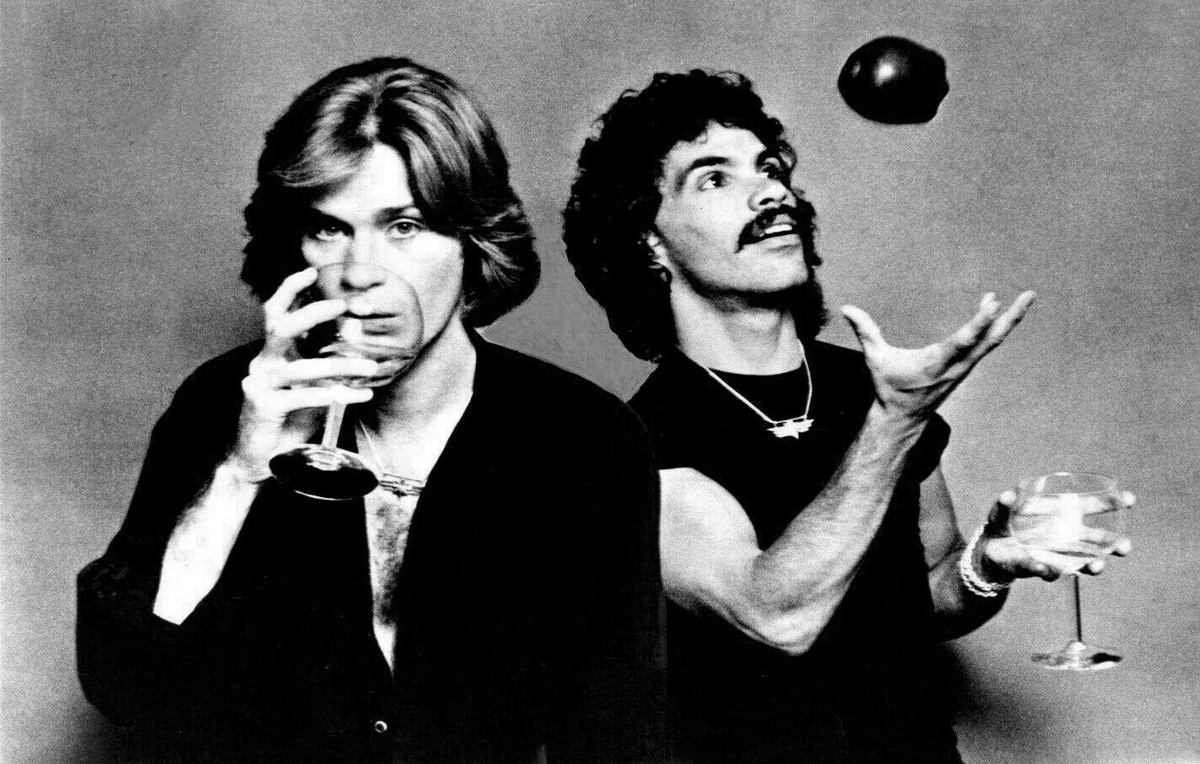
Hall & Oates
1970 –
The Most Successful Duo in Pop History

Philadelphia, 1970. Daryl Hall met John Oates at a dance during a Temple University battle of the bands -- literally a fight between two groups of musicians that somehow turned into an introduction. They found common ground in a record store, bonding over the same obscure soul and R&B 45s.

0:30
0:30
0:30
0:30

Hall was the blonde-haired, blue-eyed son of a contractor with a voice that could cut glass. Oates was the darker, quieter guitarist from the suburbs. Together they made a sound that confused everyone -- too soulful for rock radio, too rock for soul radio, too white for the Black audience they were borrowing from, too Black for the white audience they were growing up in.

The 1970s music industry had compartmentalized: white kids bought rock, Black kids bought R&B, and the crossover acts were carefully managed exceptions. Hall & Oates walked into that wall of categories and spent years hitting it. Their early albums for Atlantic were critical successes and commercial failures. They sounded like they were trying to be a Philly soul group with white faces, and the market did not know what to do with them. The cost of being early was nearly breaking them. They switched to RCA, changed producers, and spent the late 70s in a kind of wilderness, trying to find the sound that would let them be themselves without apology. The breakthrough came when they stopped trying to fit and started letting the strange in.

Hall & Oates interview 1990

"I Can't Go for That (No Can Do)" from 1981 is the place where everything clicked. The track is built on a Daryl Hall vocal melody that floats over a Daryl Hall synth bassline -- he played the bass synth himself, giving the track a coolness that was entirely his invention. The groove is minimal: a repeating bass figure, a drum machine, a saxophone that enters like a polite intruder. Hall sings about boundaries in a relationship and the song becomes about boundaries in general -- the refusal to be taken for granted, the assertion of self.
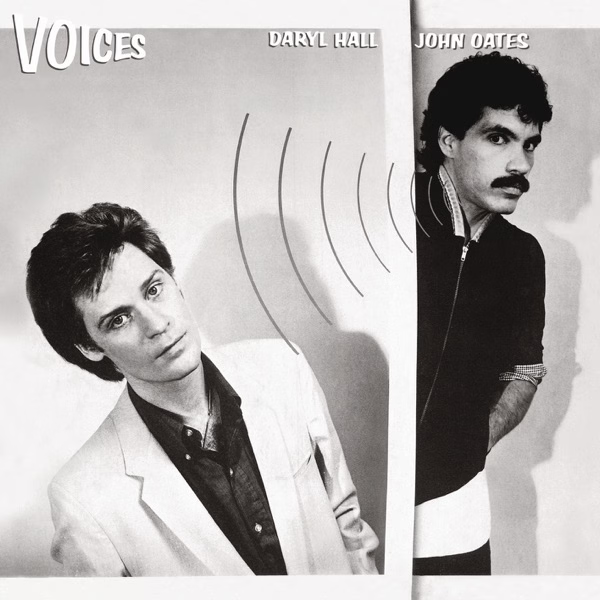
Voices (1980)

Oates contributed the lyrics and the harmony vocals, and their voices blend in a way that suggests deep trust. The song hit number one and changed what white soul could sound like.

Hall & Oates are still active, still playing, still finding audiences decades later. The Rock and Roll Hall of Fame inducted them in 2014, a recognition that arrived late but was inevitable. Their catalog has been rediscovered by younger generations who hear past the 80s production to the songcraft underneath. They were never just a pop act. They were students of the great Black music tradition who paid their dues, learned the forms, and then bent them into something new. Blue-eyed soul is a clumsy term, but it points at a real thing: the love of a tradition that is not yours by birth but by devotion. Hall & Oates earned that devotion. The records still prove it.
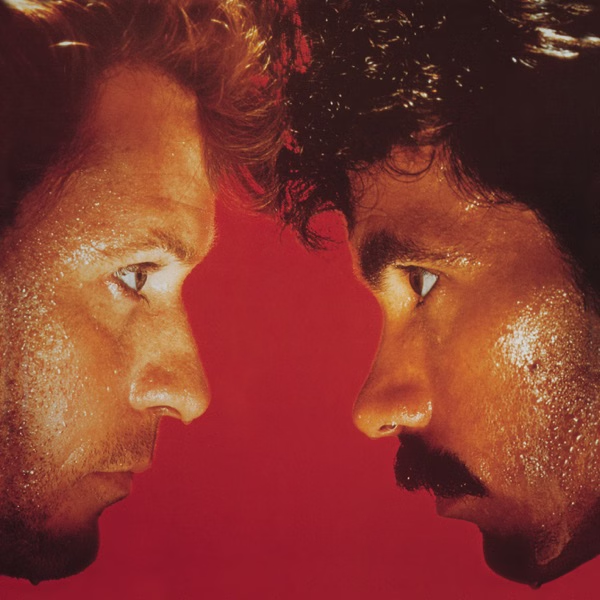
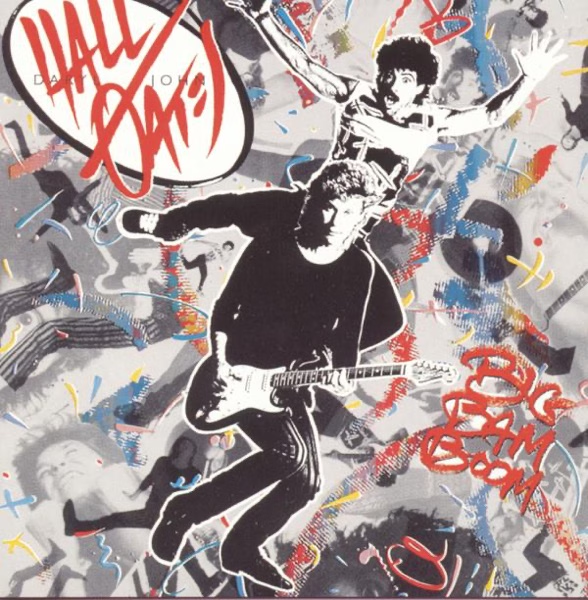
Image Credits

1,414 artist portraits across 5 genres (Rock, Jazz, Soul, Blues, Folk). 1,363 sourced from Wikipedia (Creative Commons / Public Domain), 50 from Deezer (promotional artwork).

Full attribution breakdown →

Hall & Oates

1970 –
The Most Successful Duo in Pop History

Philadelphia, 1970. Daryl Hall met John Oates at a dance during a Temple University battle of the bands -- literally a fight between two groups of musicians that somehow turned into an introduction. They found common ground in a record store, bonding over the same obscure soul and R&B 45s.

0:30
0:30
0:30
0:30

Hall was the blonde-haired, blue-eyed son of a contractor with a voice that could cut glass. Oates was the darker, quieter guitarist from the suburbs. Together they made a sound that confused everyone -- too soulful for rock radio, too rock for soul radio, too white for the Black audience they were borrowing from, too Black for the white audience they were growing up in.

The 1970s music industry had compartmentalized: white kids bought rock, Black kids bought R&B, and the crossover acts were carefully managed exceptions. Hall & Oates walked into that wall of categories and spent years hitting it. Their early albums for Atlantic were critical successes and commercial failures. They sounded like they were trying to be a Philly soul group with white faces, and the market did not know what to do with them. The cost of being early was nearly breaking them. They switched to RCA, changed producers, and spent the late 70s in a kind of wilderness, trying to find the sound that would let them be themselves without apology. The breakthrough came when they stopped trying to fit and started letting the strange in.

Hall & Oates interview 1990

"I Can't Go for That (No Can Do)" from 1981 is the place where everything clicked. The track is built on a Daryl Hall vocal melody that floats over a Daryl Hall synth bassline -- he played the bass synth himself, giving the track a coolness that was entirely his invention. The groove is minimal: a repeating bass figure, a drum machine, a saxophone that enters like a polite intruder. Hall sings about boundaries in a relationship and the song becomes about boundaries in general -- the refusal to be taken for granted, the assertion of self.

Voices (1980)

Oates contributed the lyrics and the harmony vocals, and their voices blend in a way that suggests deep trust. The song hit number one and changed what white soul could sound like.

Hall & Oates are still active, still playing, still finding audiences decades later. The Rock and Roll Hall of Fame inducted them in 2014, a recognition that arrived late but was inevitable. Their catalog has been rediscovered by younger generations who hear past the 80s production to the songcraft underneath. They were never just a pop act. They were students of the great Black music tradition who paid their dues, learned the forms, and then bent them into something new. Blue-eyed soul is a clumsy term, but it points at a real thing: the love of a tradition that is not yours by birth but by devotion. Hall & Oates earned that devotion. The records still prove it.

Voices (1980) Voices (1980)
H2O (1982) H2O (1982)
Big Bam Boom (1984) Big Bam Boom (1984)
Whole Oats (1972)
Abandoned Luncheonette (1973)
War Babies (1974)
Daryl Hall & John Oates (1975)
Bigger Than Both of Us (1976)
Beauty on a Back Street (1977)
Along the Red Ledge (1978)
X-Static (1979)
Voices (1980)
Private Eyes (1981)
H2O (1982)
Big Bam Boom (1984)
Ooh Yeah! (1988)
Change of Season (1990)
Marigold Sky (1997)
Do It for Love (2003)
Our Kind of Soul (2004)
Home for Christmas (2006)
X‐Static (1979)
H₂O (1982)
Arista Heritage Series: Daryl Hall & John Oates (1999)
soulr&bpopblue-eyed soul
The Sunday Drop
One song. One story. Every Sunday.

No algorithms. No trending sections. Just a song someone loved and the story behind it. Delivered Sunday morning.

Free. No spam. Unsubscribe anytime.

Image Credits

1,414 artist portraits across 5 genres (Rock, Jazz, Soul, Blues, Folk). 1,363 sourced from Wikipedia (Creative Commons / Public Domain), 50 from Deezer (promotional artwork).

Full attribution breakdown →

0:00
0:00