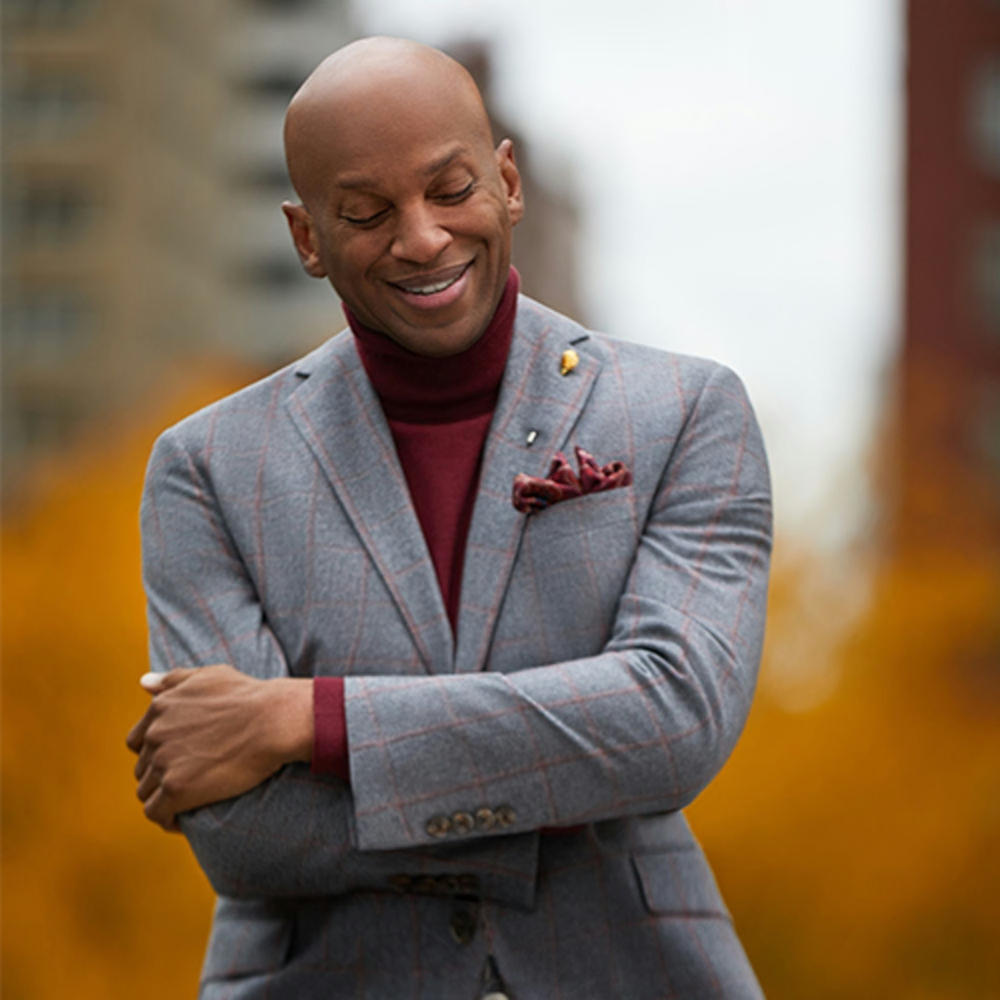
Donnie McClurkin
1959 –

Let me tell you about a man who fell so hard the only way left was up. Donnie McClurkin was born November 9, 1959 in Copiague, New York, and by the time he was a teenager he had already survived things no child should survive. He lost his brother to a drunk driver.

0:30
0:30
0:30
0:30

He was abused. He ran from the church and the church ran after him. That is the story he carries in every note he sings. You cannot fake that kind of weight in your voice. It is either there or it is not, and with Donnie McClurkin it is always there.

He walked into gospel music at a time when the genre was being reinvented by a generation of artists who had one foot in the sanctuary and one foot in the streets. Kirk Franklin was his contemporary, Yolanda Adams was his collaborator, Marvin Sapp was his brother in arms. But McClurkin's path was different because his wound was different. He became a pastor before he became a star, and that order matters. He was preaching before he was performing, which meant when he opened his mouth to sing, it was not a show. It was a sermon. The cost was brutal -- he has spoken openly about his struggles with same-sex attraction in a church that was not ready to have that conversation, and he took the hits from both sides. He kept standing. He kept singing.

Donnie McClurkin interview 1990

"We Fall Down 0:30" is one of the most recorded gospel songs of the last thirty years, and the reason is simple: it tells the truth. The lyric is four lines long and contains everything you need to know about the theology of grace. "We fall down, but we get up -- for a saint is just a sinner who fell down and got up." McClurkin wrote that from personal experience, not from a theology textbook. "Great Is Your Mercy" works the same way -- it is a gratitude song for people who have been given second chances they did not deserve.
Donnie McClurkin (1996)

His music did not just fill the church. It filled the arena. It crossed over to audiences who did not know they needed gospel until they heard it from a man who had been through the fire and come out still singing.

The legacy is complicated and honest, which is exactly how McClurkin would want it. He preached to millions, he sang to millions, he helped build the modern gospel industry into something that could sustain artists outside of Sunday morning. He showed a generation of gospel singers that you could be a pastor and a recording artist without being a hypocrite about either one. When he sings "We Fall Down" today, the room still goes quiet. That is not nostalgia. That is truth that has not expired. He fell, he got up, and he taught the rest of us how to do the same.
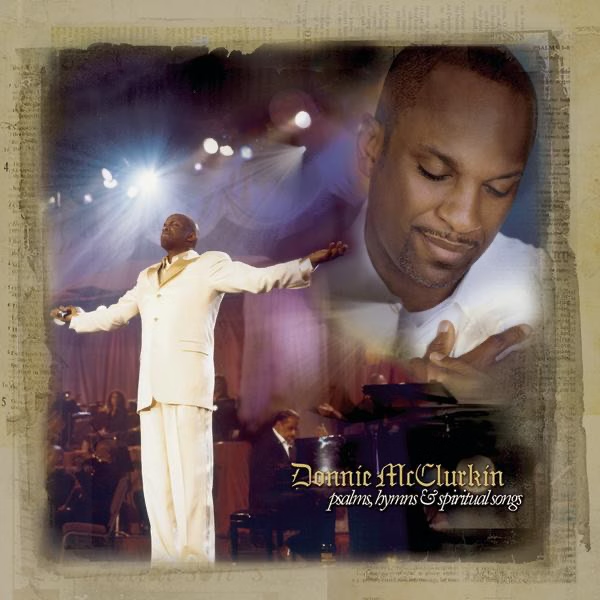

Image Credits

1,414 artist portraits across 5 genres (Rock, Jazz, Soul, Blues, Folk). 1,363 sourced from Wikipedia (Creative Commons / Public Domain), 50 from Deezer (promotional artwork).

Full attribution breakdown →

Donnie McClurkin

1959 –

Let me tell you about a man who fell so hard the only way left was up. Donnie McClurkin was born November 9, 1959 in Copiague, New York, and by the time he was a teenager he had already survived things no child should survive. He lost his brother to a drunk driver.

0:30
0:30
0:30
0:30

He was abused. He ran from the church and the church ran after him. That is the story he carries in every note he sings. You cannot fake that kind of weight in your voice. It is either there or it is not, and with Donnie McClurkin it is always there.

He walked into gospel music at a time when the genre was being reinvented by a generation of artists who had one foot in the sanctuary and one foot in the streets. Kirk Franklin was his contemporary, Yolanda Adams was his collaborator, Marvin Sapp was his brother in arms. But McClurkin's path was different because his wound was different. He became a pastor before he became a star, and that order matters. He was preaching before he was performing, which meant when he opened his mouth to sing, it was not a show. It was a sermon. The cost was brutal -- he has spoken openly about his struggles with same-sex attraction in a church that was not ready to have that conversation, and he took the hits from both sides. He kept standing. He kept singing.

Donnie McClurkin interview 1990

"We Fall Down 0:30" is one of the most recorded gospel songs of the last thirty years, and the reason is simple: it tells the truth. The lyric is four lines long and contains everything you need to know about the theology of grace. "We fall down, but we get up -- for a saint is just a sinner who fell down and got up." McClurkin wrote that from personal experience, not from a theology textbook. "Great Is Your Mercy" works the same way -- it is a gratitude song for people who have been given second chances they did not deserve.

Donnie McClurkin (1996)

His music did not just fill the church. It filled the arena. It crossed over to audiences who did not know they needed gospel until they heard it from a man who had been through the fire and come out still singing.

The legacy is complicated and honest, which is exactly how McClurkin would want it. He preached to millions, he sang to millions, he helped build the modern gospel industry into something that could sustain artists outside of Sunday morning. He showed a generation of gospel singers that you could be a pastor and a recording artist without being a hypocrite about either one. When he sings "We Fall Down" today, the room still goes quiet. That is not nostalgia. That is truth that has not expired. He fell, he got up, and he taught the rest of us how to do the same.

Donnie McClurkin (1996) Donnie McClurkin (1996)
Hymns & Spiritual Songs (2001) Hymns & Spiritual Songs (2001)
Donnie McClurkin (1996)
Psalms
Hymns & Spiritual Songs (2001)
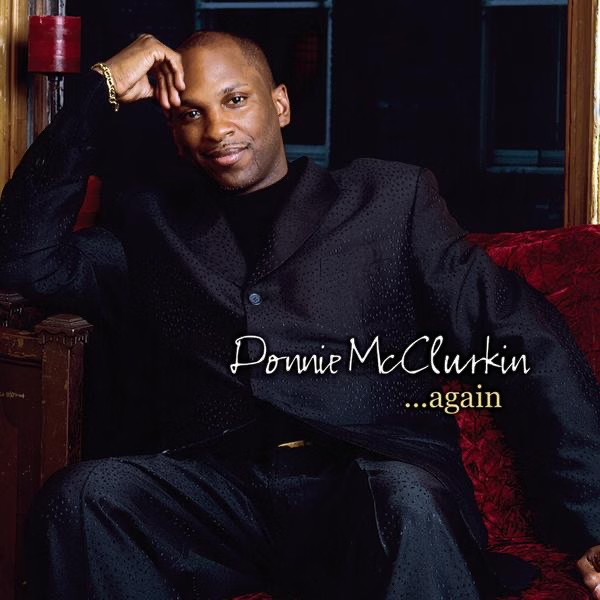
…again (2003)
Duets (2014)
A Different Song (2019)
gospelcontemporary gospel
The Sunday Drop
One song. One story. Every Sunday.

No algorithms. No trending sections. Just a song someone loved and the story behind it. Delivered Sunday morning.

Free. No spam. Unsubscribe anytime.

Image Credits

1,414 artist portraits across 5 genres (Rock, Jazz, Soul, Blues, Folk). 1,363 sourced from Wikipedia (Creative Commons / Public Domain), 50 from Deezer (promotional artwork).

Full attribution breakdown →

0:00
0:00