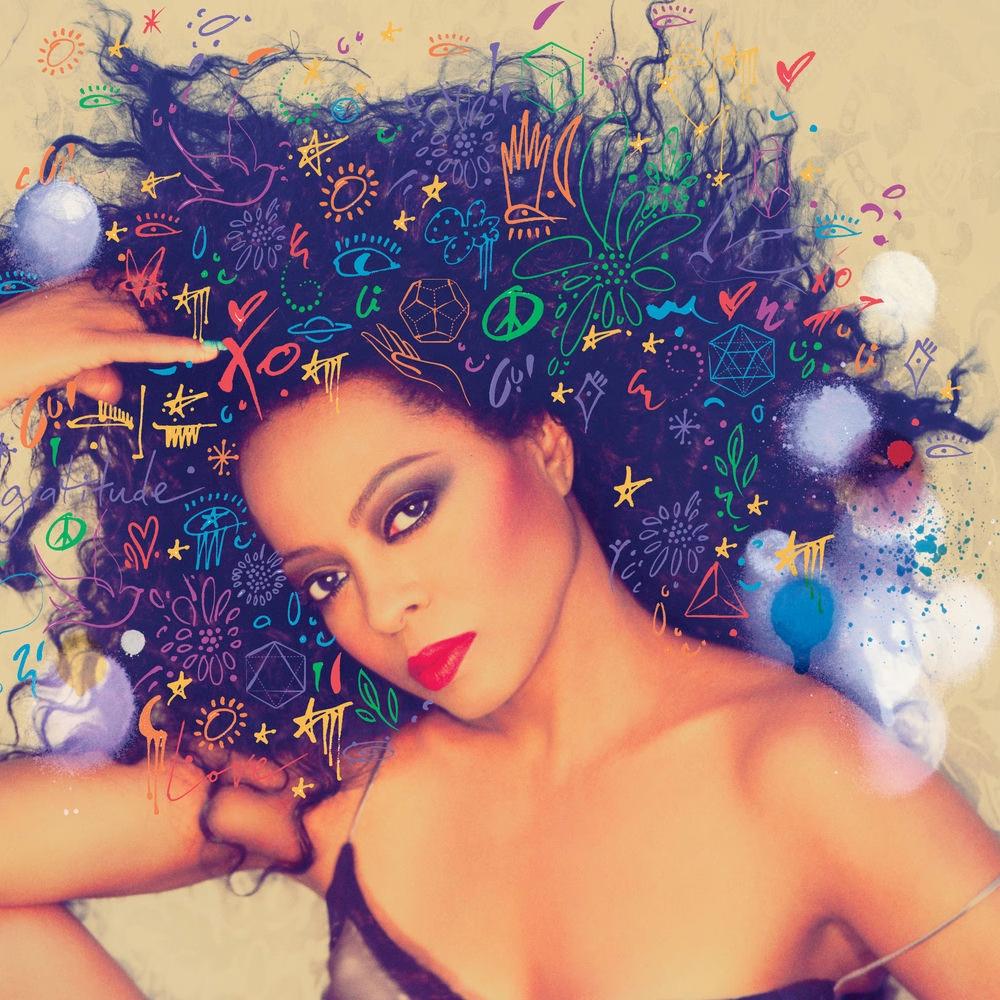
Diana Ross
1944 –
The Boss

She was born in Detroit in 1944, a city that was building the Motown machine while she was still a teenager singing in the projects. Diana Ross did not have the loudest voice in the Supremes. She did not have the most training.

0:30
0:30
0:30
0:30

What she had was the clearest vision. She understood that the Supremes were not just a singing group. They were a statement. Three Black girls in gowns and matching wigs, crossed over to the white pop audience without losing their center. Ross saw that the path to mainstream success was not about selling out. It was about making the mainstream come to you. She made them come. She made them stay.

The cost of that vision was the Supremes themselves. The group that started with other women became the Diana Ross show, and the resentment was real and justified. The founding members were pushed aside. Ross moved on. The cost was also personal -- the relentless schedule, the pressure to be perfect every single night, the loneliness of being the face of an empire. The lines between art and commerce blurred in ways that are still being examined. Ross paid for her ambition in friendships, in privacy, in the constant negotiation between being a star and being a person. She chose the star. She chose it every time. And she lived with the consequences of those choices.

Diana Ross interview 1990

"Ain't No Mountain High Enough 0:30" was a song that had been sung before. Ross took it solo in 1970 and made it something else entirely. The spoken-word opening. The slow build.
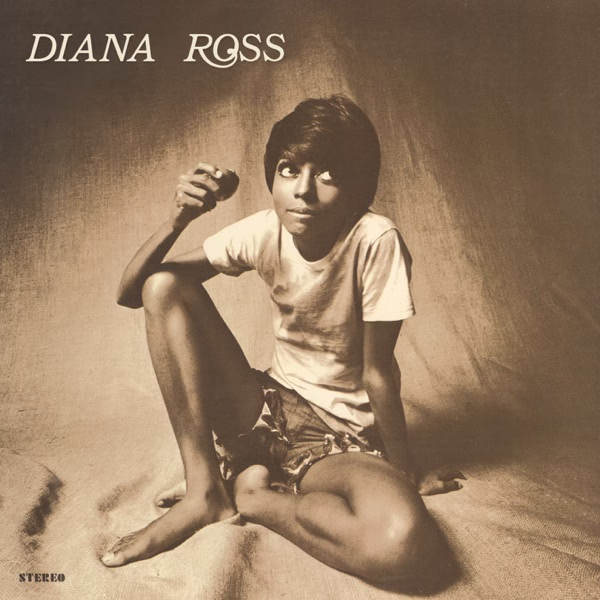
Diana Ross (1970)

The explosion of strings and voices. It was not a pop song. It was a sermon on devotion. Ross did not just sing it. She acted it. She carried you through the story of someone who would cross any obstacle for love. That was her gift: she did not just perform songs. She performed conviction. She made you believe that she meant every word she sang. Her work with the Supremes at Motown created the template for every girl group that followed. Her solo career proved that she was not a product of the machine. She was the one who knew how to run it.

She is still alive, still performing, still the icon. Diana Ross became the most successful female recording artist of her era, a feat that cannot be separated from the ambition that shaped everything she did. That is the truth of her legacy: she was willing to be what she needed to be in order to be great. The girls from Detroit who watched the Supremes on television saw a future they had not known existed. Ross made that future visible. She did not just climb the mountain. She became the mountain herself. Every girl group that came after -- every woman who has ever stood in formation and harmonized -- is walking on ground that Diana Ross and the Supremes cleared.
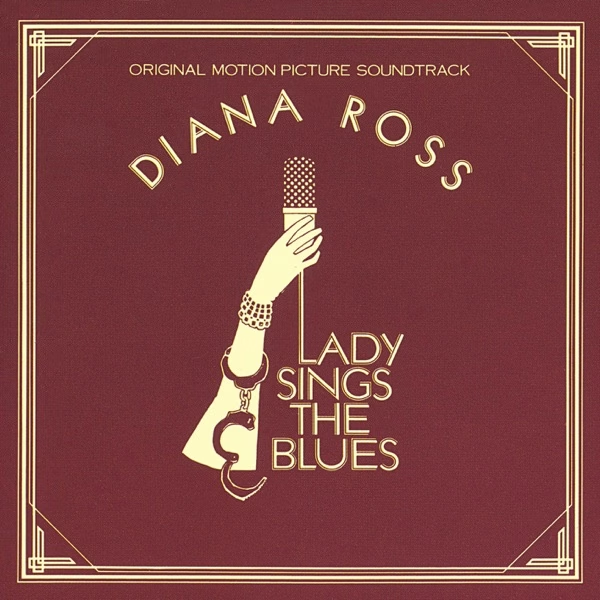
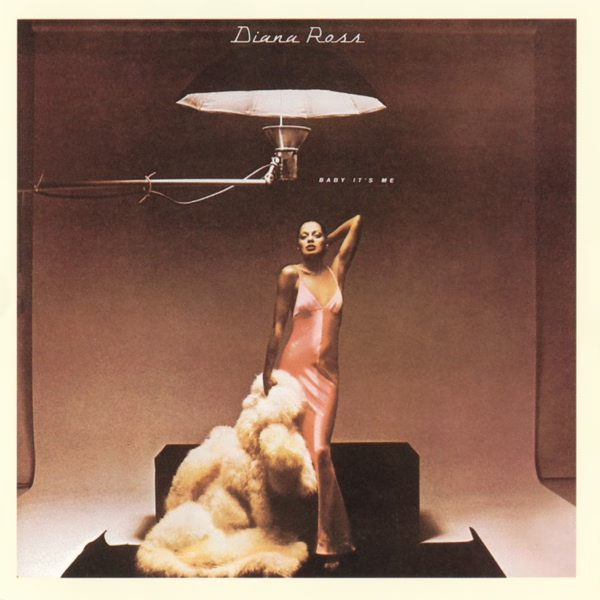
Image Credits

1,414 artist portraits across 5 genres (Rock, Jazz, Soul, Blues, Folk). 1,363 sourced from Wikipedia (Creative Commons / Public Domain), 50 from Deezer (promotional artwork).

Full attribution breakdown →

Diana Ross

1944 –
The Boss

She was born in Detroit in 1944, a city that was building the Motown machine while she was still a teenager singing in the projects. Diana Ross did not have the loudest voice in the Supremes. She did not have the most training.

0:30
0:30
0:30
0:30

What she had was the clearest vision. She understood that the Supremes were not just a singing group. They were a statement. Three Black girls in gowns and matching wigs, crossed over to the white pop audience without losing their center. Ross saw that the path to mainstream success was not about selling out. It was about making the mainstream come to you. She made them come. She made them stay.

The cost of that vision was the Supremes themselves. The group that started with other women became the Diana Ross show, and the resentment was real and justified. The founding members were pushed aside. Ross moved on. The cost was also personal -- the relentless schedule, the pressure to be perfect every single night, the loneliness of being the face of an empire. The lines between art and commerce blurred in ways that are still being examined. Ross paid for her ambition in friendships, in privacy, in the constant negotiation between being a star and being a person. She chose the star. She chose it every time. And she lived with the consequences of those choices.

Diana Ross interview 1990

"Ain't No Mountain High Enough 0:30" was a song that had been sung before. Ross took it solo in 1970 and made it something else entirely. The spoken-word opening. The slow build.

Diana Ross (1970)

The explosion of strings and voices. It was not a pop song. It was a sermon on devotion. Ross did not just sing it. She acted it. She carried you through the story of someone who would cross any obstacle for love. That was her gift: she did not just perform songs. She performed conviction. She made you believe that she meant every word she sang. Her work with the Supremes at Motown created the template for every girl group that followed. Her solo career proved that she was not a product of the machine. She was the one who knew how to run it.

She is still alive, still performing, still the icon. Diana Ross became the most successful female recording artist of her era, a feat that cannot be separated from the ambition that shaped everything she did. That is the truth of her legacy: she was willing to be what she needed to be in order to be great. The girls from Detroit who watched the Supremes on television saw a future they had not known existed. Ross made that future visible. She did not just climb the mountain. She became the mountain herself. Every girl group that came after -- every woman who has ever stood in formation and harmonized -- is walking on ground that Diana Ross and the Supremes cleared.

Diana Ross (1970) Diana Ross (1970)
Lady Sings the Blues (1972) Lady Sings the Blues (1972)
Baby It's Me (1977) Baby It's Me (1977)
Diana Ross (1970)
Everything Is Everything (1970)
Surrender (1971)
Lady Sings the Blues (1972)
Touch Me in the Morning (1973)
Last Time I Saw Him (1973)
Baby It's Me (1977)
Ross (1978)
The Boss (1979)
Diana (1980)
Why Do Fools Fall in Love (1981)
Silk Electric (1982)
Swept Away (1984)
Eaten Alive (1985)
Red Hot Rhythm & Blues (1987)
Workin' Overtime (1989)
The Force Behind the Power (1991)
Take Me Higher (1995)
Every Day Is a New Day (1999)
r&bsoulpop
The Sunday Drop
One song. One story. Every Sunday.

No algorithms. No trending sections. Just a song someone loved and the story behind it. Delivered Sunday morning.

Free. No spam. Unsubscribe anytime.

Image Credits

1,414 artist portraits across 5 genres (Rock, Jazz, Soul, Blues, Folk). 1,363 sourced from Wikipedia (Creative Commons / Public Domain), 50 from Deezer (promotional artwork).

Full attribution breakdown →

0:00
0:00