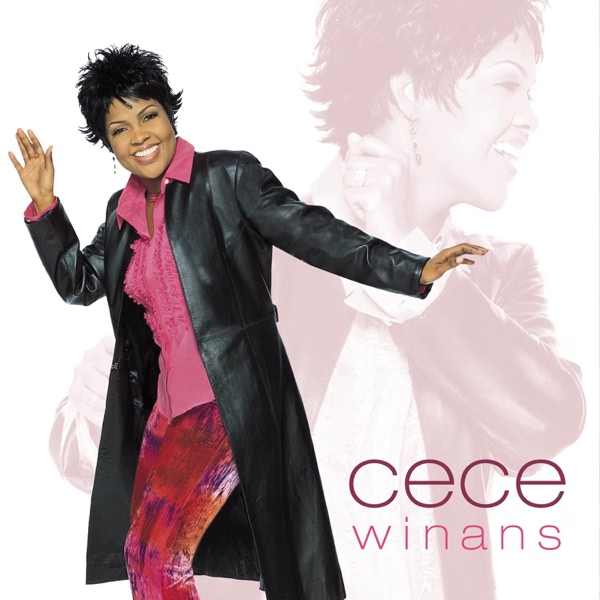
I have to tell you about a voice that did not need a microphone. I have to tell you about a woman from Detroit who sang in her father's church and ended up singing for the world without ever changing the message. CeCe Winans opened her mouth and the room went quiet because the room understood it was in the presence of something that could not be manufactured.
That is not hyperbole. That is what happened every single time. The voice came from somewhere deeper than technique, and you knew it the second you heard it.
She was born October 8, 1964 in Detroit, the seventh of ten children in the Winans family, and she did not choose gospel -- gospel chose her. She started singing with her brother BeBe in the early 80s, and together they walked into a music industry that did not know what to do with a gospel act that sounded this good. The cost was real. The church said they were too worldly. The world said they were too churchy. CeCe carried that tension in her throat every time she sang, and that is why the voice sounded the way it did -- it was holding two worlds together by sheer force of faith. She sang with Aretha Franklin. She sang with Whitney Houston. She never lost the church in her voice, no matter how big the stage got.
"Alabaster Box 0:30" is not a song. It is a sermon set to music, a retelling of the woman who broke her jar of expensive perfume at Jesus's feet. When CeCe sings it, you understand why that woman did what she did. The track does not need arrangements or production tricks -- it needs a voice that believes every word, and CeCe Winans has that voice.
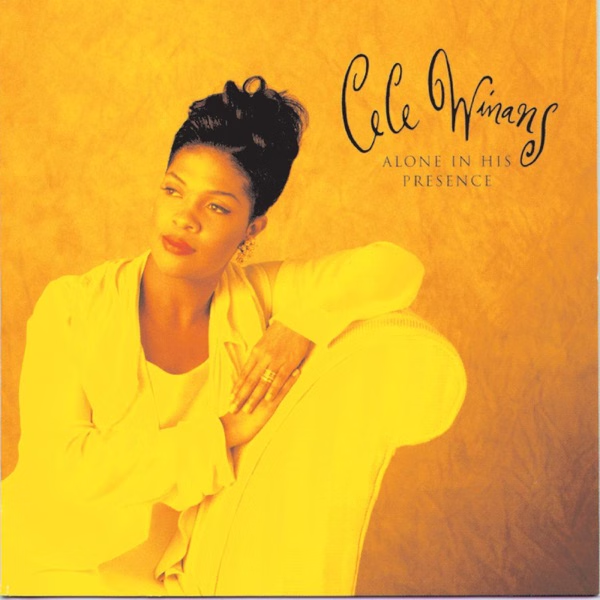
"Count On Me" became a wedding staple, a friendship anthem, a song that people played at funerals and graduations and every moment in between. She made contemporary gospel safe for pop audiences without diluting a single note of the gospel. She won Grammys, she sold millions, but the real victory was that she never had to compromise to do it. The church music stayed church music even when it was on every radio in America.
Here is the verdict: CeCe Winans is the standard that every contemporary gospel singer measures themselves against, whether they know it or not. She took the traditions of the black church -- the call and response, the building bridge, the moment when the singer stops performing and starts testifying -- and brought them to an audience that thought they needed something else. She proved that you do not need to water down the Word to make it heard. Forty years in, her voice has not dimmed. She is still singing the same gospel. It is still hitting the same way. That is not a career. That is a calling, and she answered it.