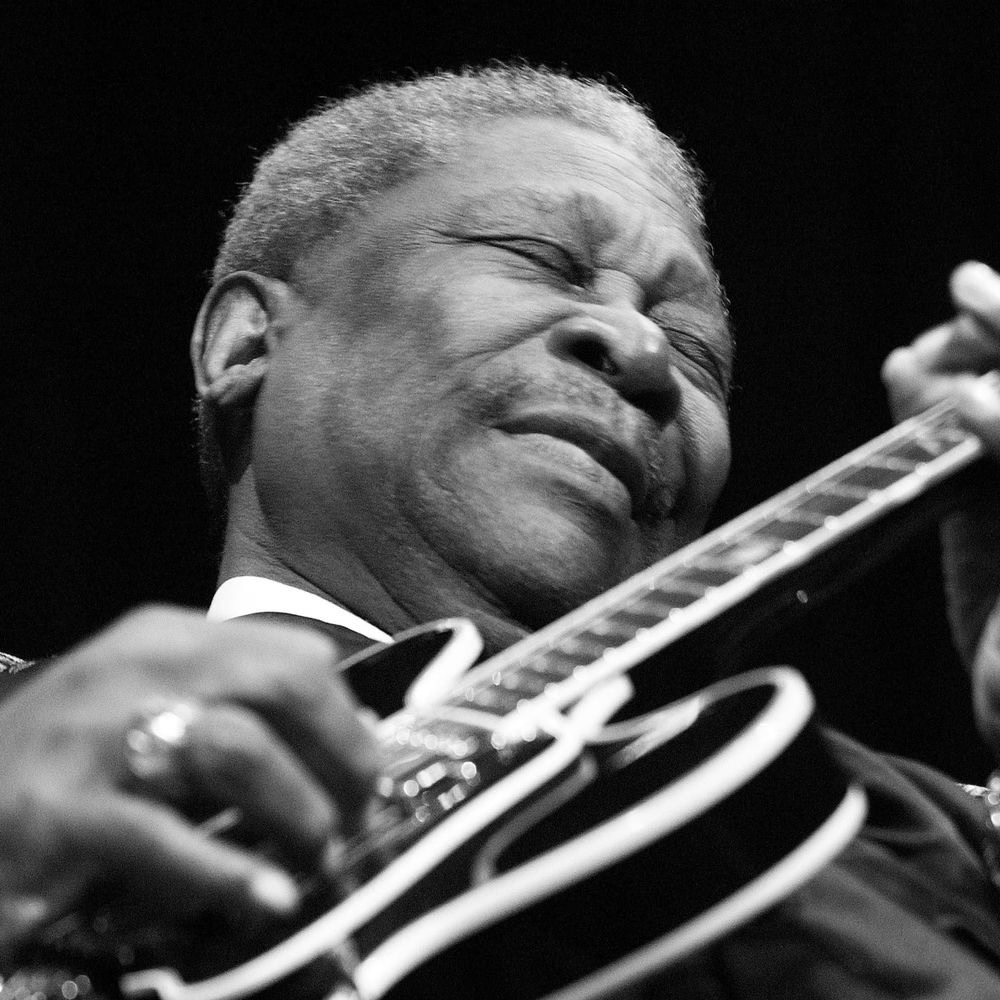
B.B. King
1925 – 2015 (90)
The King of the Blues, Lucille and All

He called his guitar Lucille. Named her after a woman who started a fight in a dance hall that tipped over a kerosene heater and burned the building down. B.B.

0:30
0:30
0:30
0:30

King ran back into the flames to save his guitar. That is the story. That is the whole story. Born on a cotton plantation in Berclair, Mississippi in 1925, Riley B. King learned early that the things you love will try to kill you and you have to save them anyway. The blues is not a feeling. It is a decision. It is choosing to pick up the instrument one more time after life has shown you exactly what it is capable of taking away.

King arrived in Memphis in the 1940s, part of the Great Migration that emptied the rural South into the cities. He worked as a tractor driver, sang gospel, and watched how people reacted to music in the clubs and churches and street corners of his new city. He learned that the audience told you what worked. What worked for B.B. King was the single note: one bent string, held for exactly the right amount of time, saying everything a thousand words could not say. He stripped the blues down to its essentials and made the silence between the notes as important as the notes themselves. He played alongside Bobby Bland, alongside every major blues figure of his era, and he kept Lucille close because she was the only companion who never asked him to be anybody else.

B.B. King interview 1990

"The Thrill Is Gone 0:30" in 1969 changed everything. It was not a traditional twelve-bar blues. It had strings. It had a bridge.
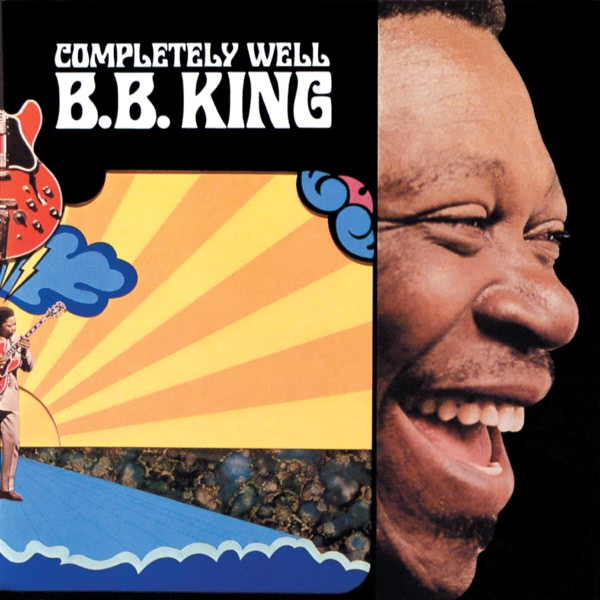
Completely Well (1969)

It had the kind of production that could have ruined the feel. Instead, it liberated it. The song crossed over to white audiences, making King into a household name, without making him into a novelty. He became the first blues artist to truly integrate the pop charts while remaining completely, unapologetically a bluesman. He toured the world relentlessly for decades. He watched the Civil Rights movement reshape the country and he understood that his music had been part of that reshaping, not because he wrote protest songs but because he played the sound of a man enduring. The single note became a symbol. It said more than words ever could.

He died in 2015 at eighty-nine, having performed into his final years. The funeral was a procession that stretched for miles through the streets of the Mississippi Delta. Lucille sits in a museum now, but the sound of that one bent string is still vibrating somewhere. B.B. King did not invent the blues. He just found the purest way to play it. One note. Bent toward heaven. Held until it broke your heart. That was enough. That was everything he needed. And it was more than most men ever achieve. He turned a single guitar string into a voice that spoke for generations.

B.B. King was profiled in the documentary, The Life of Riley, in 2012.

Image Credits

1,414 artist portraits across 5 genres (Rock, Jazz, Soul, Blues, Folk). 1,363 sourced from Wikipedia (Creative Commons / Public Domain), 50 from Deezer (promotional artwork).

Full attribution breakdown →

B.B. King

1925 – 2015 (90)
The King of the Blues, Lucille and All

He called his guitar Lucille. Named her after a woman who started a fight in a dance hall that tipped over a kerosene heater and burned the building down. B.B.

0:30
0:30
0:30
0:30

King ran back into the flames to save his guitar. That is the story. That is the whole story. Born on a cotton plantation in Berclair, Mississippi in 1925, Riley B. King learned early that the things you love will try to kill you and you have to save them anyway. The blues is not a feeling. It is a decision. It is choosing to pick up the instrument one more time after life has shown you exactly what it is capable of taking away.

King arrived in Memphis in the 1940s, part of the Great Migration that emptied the rural South into the cities. He worked as a tractor driver, sang gospel, and watched how people reacted to music in the clubs and churches and street corners of his new city. He learned that the audience told you what worked. What worked for B.B. King was the single note: one bent string, held for exactly the right amount of time, saying everything a thousand words could not say. He stripped the blues down to its essentials and made the silence between the notes as important as the notes themselves. He played alongside Bobby Bland, alongside every major blues figure of his era, and he kept Lucille close because she was the only companion who never asked him to be anybody else.

B.B. King interview 1990

"The Thrill Is Gone 0:30" in 1969 changed everything. It was not a traditional twelve-bar blues. It had strings. It had a bridge.

Completely Well (1969)

It had the kind of production that could have ruined the feel. Instead, it liberated it. The song crossed over to white audiences, making King into a household name, without making him into a novelty. He became the first blues artist to truly integrate the pop charts while remaining completely, unapologetically a bluesman. He toured the world relentlessly for decades. He watched the Civil Rights movement reshape the country and he understood that his music had been part of that reshaping, not because he wrote protest songs but because he played the sound of a man enduring. The single note became a symbol. It said more than words ever could.

He died in 2015 at eighty-nine, having performed into his final years. The funeral was a procession that stretched for miles through the streets of the Mississippi Delta. Lucille sits in a museum now, but the sound of that one bent string is still vibrating somewhere. B.B. King did not invent the blues. He just found the purest way to play it. One note. Bent toward heaven. Held until it broke your heart. That was enough. That was everything he needed. And it was more than most men ever achieve. He turned a single guitar string into a voice that spoke for generations.

B.B. King was profiled in the documentary, The Life of Riley, in 2012.

Completely Well (1969) Completely Well (1969)
Singin’ the Blues (1957)
The Blues (1958)
B.B. King Sings Spirituals (1959)
King of the Blues (1960)
Compositions of Duke Ellington and Others (1960)
My Kind of Blues (1961)
More B. B. King (1961)
Easy Listening Blues (1962)
Blues in My Heart (1963)
The Soul of B.B. King (1963)
Mr. Blues (1963)
Blues on Top of Blues (1968)
Lucille (1968)
His Best – The Electric B.B. King (1968)
Completely Well (1969)
bluesr&b
The Sunday Drop
One song. One story. Every Sunday.

No algorithms. No trending sections. Just a song someone loved and the story behind it. Delivered Sunday morning.

Free. No spam. Unsubscribe anytime.

Image Credits

1,414 artist portraits across 5 genres (Rock, Jazz, Soul, Blues, Folk). 1,363 sourced from Wikipedia (Creative Commons / Public Domain), 50 from Deezer (promotional artwork).

Full attribution breakdown →

0:00
0:00