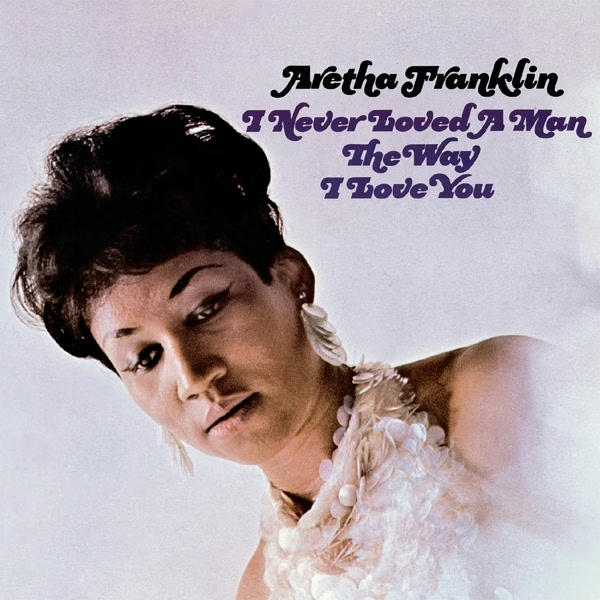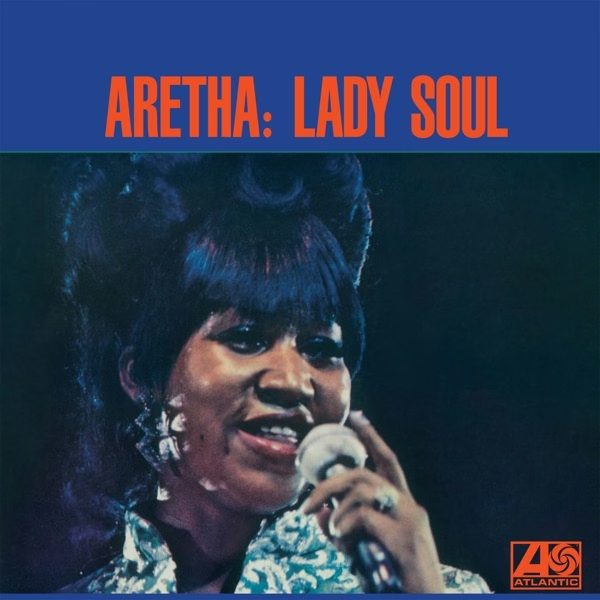
She walked into Muscle Shoals in 1967 -- a 24-year-old Black woman who'd spent six years at Columbia Records making polite jazz albums nobody bought -- sat down at the piano, and cut I Never Loved a Man (The Way I Love You) in one take. The Muscle Shoals rhythm section, white Alabama boys who'd never heard a voice like that, watched her play and sing simultaneously and had the good sense to follow her lead. Jerry Wexler at Atlantic understood what Columbia had spent six years missing: Aretha Franklin wasn't a singer you dressed up in strings and taught to be a lady.
She was a force of nature. The less you got in her way, the more powerful she became.
"There is a rose in Spanish Harlem 0:30 / A rose in black at Spanish Harlem"
-- from Spanish Harlem 0:30
She'd been singing since before she could talk, in her father's New Baptist Church in Detroit. C.L. Franklin was the most famous Black preacher in America -- "the man with the million-dollar voice" -- and his house was a way station for every gospel star and civil rights leader passing through. Mahalia Jackson was a family friend. Martin Luther King Jr. stayed with the Franklins when he was in Detroit. Aretha was pregnant at 12, a mother at 13, and on the road singing by 16, traveling with her father's gospel caravan. The pain of those years -- the shame, the stolen childhood -- she never talked about publicly. She put it in the piano instead. She also carried the artists who came after her, mentoring Whitney Houston long before the world knew who Whitney was, standing behind everyone from Mavis Staples to Mary J. Blige, a queen who never forgot she came from a kingdom of other voices.
RESPECT was Otis Redding's song first -- a man demanding recognition from his woman. Aretha flipped it. She kept the verses, added the bridge, brought in her sisters Carolyn and Erma on backup vocals, and turned it into an anthem that didn't ask. It told you. The song hit number one and became the soundtrack of a movement -- Black women claiming their space in a world that had never offered it voluntarily. What followed was a run no one has matched: Chain of Fools 0:30, (You Make Me Feel Like) A Natural Woman 0:30*, Think 0:30, Baby I Love You 0:30, I Say a Little Prayer 0:30. She was 25 and she was the most important singer alive. Spanish Harlem -- her 1971 cover of Ben E. King's song -- climbed to No. 2 on the Billboard Hot 100, proof that Aretha could take any song and make it sound like it had always been waiting for her. The voice was the thing: a four-octave range, but not the range itself -- the control. The way she held a note steady for eight bars and then cracked it open, just slightly, on the ninth, letting the pain through. She'd been trained in the church and she never lost the gospel instinct: every song was a testimony. The height of this was Amazing Grace 0:30, recorded live at the New Temple Missionary Baptist Church in Los Angeles over two nights in 1972, with James Cleveland directing the Southern California Community Choir and Aretha at the piano. It sold two million copies. It's the best-selling gospel album of all time. The documentary about that recording, also called Amazing Grace*, was finally released in 2018 and captured her at her most unguarded -- Aretha in a church dress, sweat on her forehead, playing and singing the music she was raised on.
The decades after the Atlantic run were more complicated. Her weight fluctuated. The tabloids circled. But Aretha Franklin didn't owe anyone a consistent third act. She'd already given more than enough -- and then she kept giving. She sang at Martin Luther King's funeral and Barack Obama's inauguration. When Luciano Pavarotti was too sick to perform at the 1998 Grammys, she stepped in on 20 minutes' notice and sang Nessun Dorma -- his aria, in his key -- and made it hers. The Queen of Soul earned the title every day for 50 years. She never abdicated. Every singer who's ever opened her mouth and demanded to be heard is standing on what Aretha built.
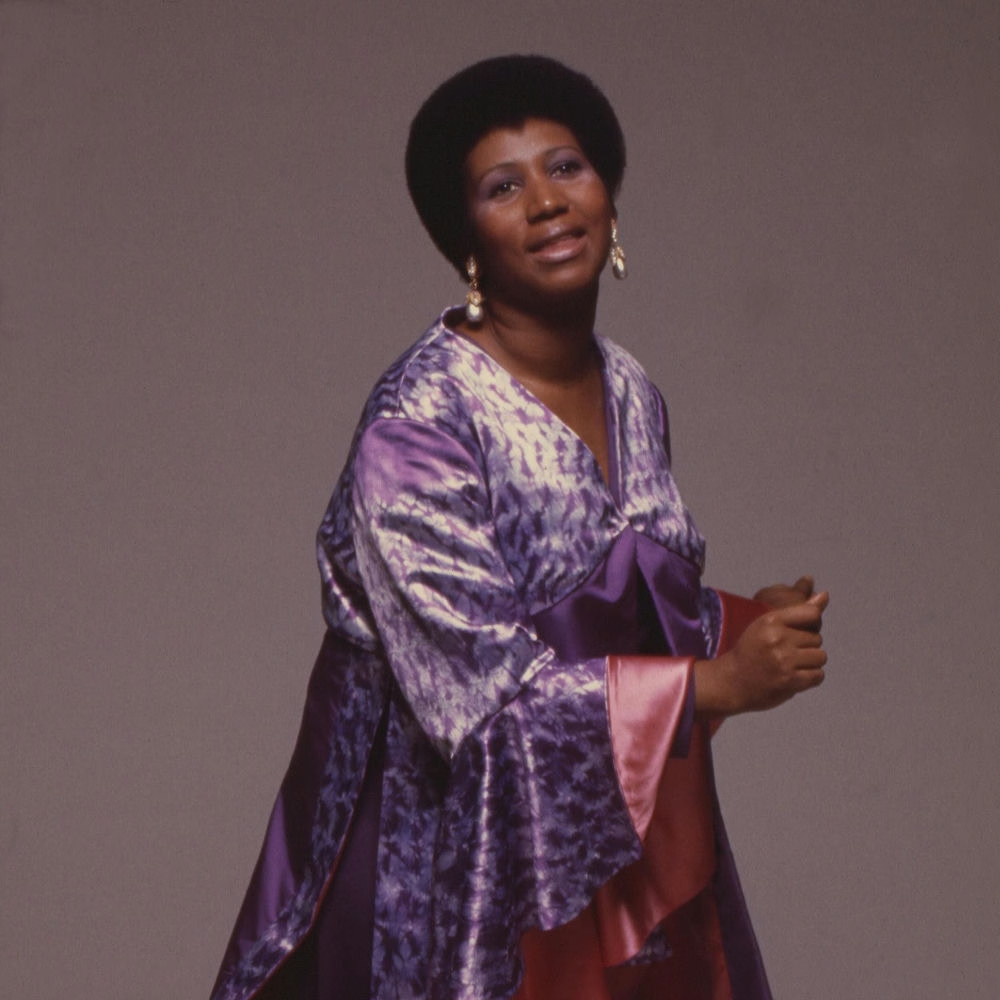
Aretha Franklin was profiled in the documentary, Amazing Grace, in 2018.